Chemical car care
Protection of automotive tires
With prolonged use or storage out of service, rubber becomes brittle, hard, and loses its elasticity. This process is slow and takes several years.
The condition of car tires depends primarily on the action of oxygen, ozone and ultraviolet radiation. Heat accelerates the reactions that destroy rubber.
Under stress, rubber ages faster, that is, precisely during regular use. Rubber’s greatest enemies are copper, cobalt, and manganese. Even the smallest amounts of these metals attack and destroy rubber in a short time.
Protect rubber from oil (oil dissolves it), sunlight and heat. Storing rubber when not in use requires cool and damp rooms, and it is advisable to coat the rubber surfaces with chemical protective agents.
For rubber care, it is advisable to coat rubber surfaces with a 50%-percent mixture of glycerin and water, two to three times.
Antifreeze
Ethylene glycol is a colorless, transparent, odorless syrupy liquid. The boiling point is 197,2°C. (60%-percent aqueous solution of ethylene glycol freezes at -40°C.)
A coolant mixture for various temperatures can be made by mixing water with ethylene glycol in the following ratios:
10% ethylene glycol and 90% water, used down to -4°C,
20% ethylene glycol and 80% water, is used down to -9°C,
30% ethylene glycol and 70% water, used down to -15°C,
40% ethylene glycol and 60% water, used down to -24°C,
50% ethylene glycol and 50% water, used down to -36°C.
To prevent corrosion, we add 3-7 grams of sodium benzoate to each liter of the mixture. Ethylene glycol is poisonous!
Softening of cooling water
It is best to use rainwater or distilled water. Medium-hard water is softened with 5 g of slaked lime and 10 grams of soda per 10 liters of water. After standing for several hours, the separated precipitate settles, so we can easily pour off the clear water. The separated clean water is then put into another container, and only then poured into the cooler.
Dissolution of lime scale
If we notice lime scale forming in the boiler, we add a hot solution of trisodium phosphate (Na3PO4), which will dissolve the deposited scale.
To 100 liters of water, add 6 g of trisodium phosphate, heating the solution to 80-90°C, wash the radiator for 3-4 hours, allowing the water to circulate through the cooling system, then drain the solution and wash the radiator with clean water. If necessary, repeat this procedure several times until the scale has completely dissolved.
Defogging
Experience has shown that metal and glass surfaces fog up easily if one side is at a lower temperature. On the other, warmer side, water vapor then condenses readily. We will give several recipes for defogging these surfaces:
1. 100 g of water,
30 g of glycerin,
3 g of egg white,
0,5 g sodium benzoate.
2. 79 parts of water,
20 parts of glycerin,
1 part albumin,
0,1 part phenol.
3. 5 parts of silicone oil,
35 trichloroethylene,
dissolved in 60 parts of gasoline.
Poliplasti brand
(plastic masses)
Although they are the youngest members of the large family of chemicals used in households, they have already displaced many classical substances from use.
Their classification is best carried out according to the method of heat treatment. Namely, some soften when heated, while others harden when heated. The former are called thermoplastics, the latter thermosets. Thermosets can often be brought once by heating into a semi-liquid state, (they take on the desired shape in molds), but further exposure to heat irreversibly turns them into a solid state. Reheating can no longer soften them.
Thermoplastics soften when heated - they become plastic - they can be shaped in molds and harden on cooling. When reheated, they soften again and can be shaped again. This reshaping can be repeated countless times.
Thermoplastics
Polyethylene
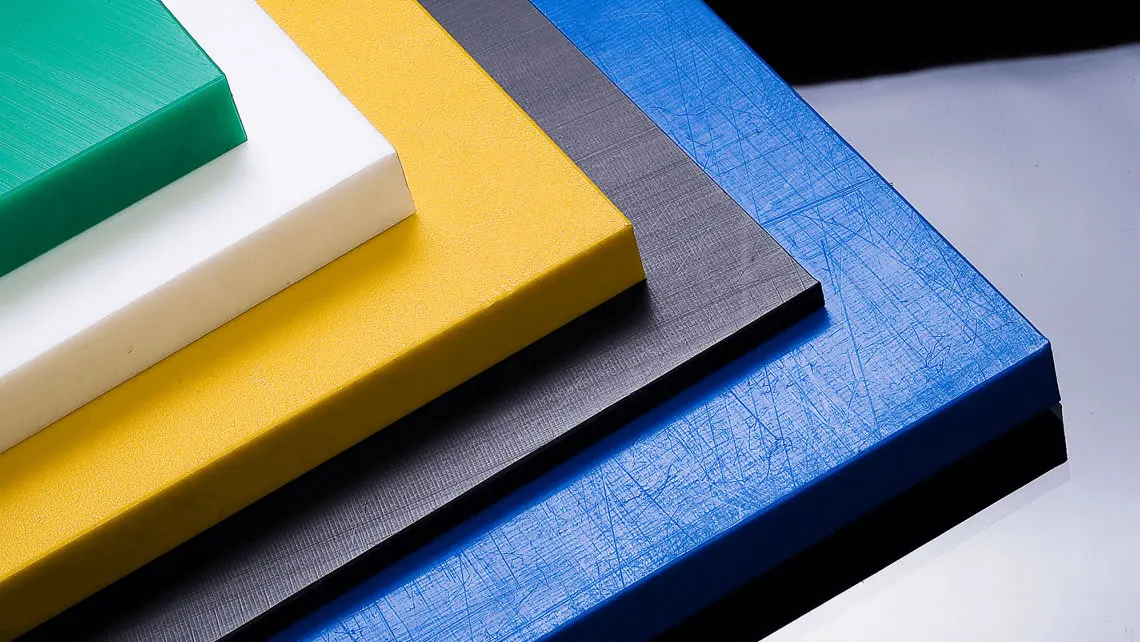
Polyethylene is a polymer of ethylene. A porous, plastic material that feels greasy to the touch. It is not poisonous and is highly resistant to chemical action. It melts at about 105-110°C. At room temperature it has no suitable solvent or adhesive. Typical uses: electrical insulating materials, unbreakable containers, pipes, films. It cannot be machined with cutting tools.
Polypropylene
Polymer is propylene. It is similar to polyethylene, but more brittle and melts at about 180°C. It is not suitable for hand casting, because of the high density of the molten mass. It is not poisonous and is resistant to chemical action. At room temperature it is insoluble and cannot be bonded.
The use of polypropylene is similar to polyethylene, but because of its higher melting point and greater tensile strength it can be applied more widely. Thus it is used for containers and utensils that are sterilized, pressure pipes, fan blades and motorboat propellers, unbreakable boxes, toys, etc. All these items are made of polypropylene. It is less suitable for machining by chip removal.

Polymethyl acrylate
(Plexi-glass)
Plexiglas is a polymer of methyl acrylate. It is a clear, rarely colored material, somewhat less brittle than polystyrene. At 90°C softening begins, and at 140-150°C it can be plastically worked. It is non-toxic, partially resistant to the action of acids and bases. The best solvent is chloroform, which is also an adhesive. It transmits light rays exceptionally well. It comes on the market in the form of sheets, tubes, and rods. The trade name of Plexiglas produced in Galenika Zemun is Klirit. It is easily machined with cutting tools. After thermal processing, when cooled, it holds the acquired shape well. By reheating, it returns to its original shape. It is very suitable for do-it-yourself work in the home.
Polystyrene
Polystyrene is a polymer of vinyl benzene. Colorless, transparent or translucent. Softening begins at about 80°C, and the processing temperature is about 120-140°C, and at 200° it already decomposes.
It is non-toxic; acids and alkalis dissolve it. The best solvent, that is, adhesive, is benzene. A long-known and widely used plastic. Its relative brittleness and fragility limit an otherwise very wide range of applications. Boxes, dishes, toys, buttons, as well as combs, handles, battery cases, films, and similar products are made of polystyrene. Its electrical properties, dielectric strength, and low dielectric losses make it an excellent material in electrical engineering. A benzene solution of polystyrene is an excellent adhesive for paper, provides excellent impregnation, and is waterproof. It is not recommended for machining with chip removal.
Polyamide (nylon)
By chemical composition, it is a condensation product of dicarboxylic acids and diamines. In structure it is similar to natural proteins. It is very resistant, yellowish, transparent. Its melting point is around 140°C. It is non-toxic; freshly dissolved, it has a bitter taste due to decomposition products. It is less resistant to the action of chemicals. It has no suitable solvent; it is dissolved by formic, i.e. acetic acid.
It is most commonly used for the production of fibers. By injection molding and pressing, various items are also made. Polyamide materials are well machined by chip removal, especially in the production of quiet gears and shafts.
Polyvinyl chloride (PVC, mipolam)
Chemically, it is a polymer of vinyl chloride. A hard, colorless resinous material. In use, it is mixed with a smaller or larger amount of plasticizer (dibutyl phthalate, dioctyl phthalate). Depending on the amount of plasticizer, we obtain rigid PVC (Vinidur) or a softened, elastic product (Mipolam). It resists the action of chemicals very well. It has no suitable solvent; chlorinated solvents (carbon tetrachloride, chloroform, dichloroethane, cyclohexanone) dissolve it slowly. For bonding, a special PVC adhesive is available on the market. It is relatively poorly bonded with a mixture of 1:1 dichloroethane and cyclohexanone.
It is used for: pipes (it is well worked by chip removal, and when heated it becomes flexible) for water supply, sewerage, etc., and for making vessels for acids and chemicals. Plasticized PVC is used primarily for making films (raincoats, packaging, bags). PVC is most commonly joined by welding with hot air. Plasticized PVC films are joined by a combination of welding and bonding.
Polytetrafluoroethylene (Teflon)
By chemical composition it is a polymer of tetrafluoroethylene. Solid, slightly elastic, colorless, translucent in a thinner layer. Larger blocks are milky white. Its unmatched dielectric properties, as well as exceptional temperature properties and complete insolubility, make this material indispensable in some cases. However, its cost makes it difficult to access. Industrial processing of Teflon is fairly difficult, and household processing even more so. It has no solvent. It can be bonded only with special adhesives, and only with very modest success. It can be used up to 350°C, and softens at around 400-450°C.
Cellulose acetate
It is produced from natural cellulose (cotton wool) using acetic acid. It has a complex molecule of variable composition.
A solid, durable material, not resistant at somewhat higher temperatures. Softening begins at 60°C, melting occurs at 100–110°C. It is transparent, but its permeability does not reach that of polystyrene. Its use is similar to polystyrene, but objects made of cellulose acetate are less brittle. It cannot be colored as successfully as polystyrene. It is not flammable, and is therefore used for film production. Solvents are (depending on the manufacturing process) acetone, (chloroform, dichloroethylene). Bonding is most successfully carried out with a concentrated acetic acid solution. Heat treatment and machining by chip removal are possible.
Nitrocellulose (celluloid)
It is produced from natural cellulose by the action of nitric acid. It is composed of nonuniform, complex molecules.
A cotton-wool-like, highly flammable, explosive substance. It dissolves well in acetone. Solutions with the addition of plasticizers (diethyl phthalate, dibutyl phthalate) are well-known lacquers (nitro lacquer, zapon lacquer, collodion lacquer, duc lacquer).
Nitrocellulose mixed with camphor (10-30%), as a plasticizer, is known under the name celluloid. This substance is one of the first plastics, with excellent properties (impact-resistant, transparent, inexpensive, aesthetically pleasing), and has been driven out of everyday use only because of its high flammability. Care must be taken very carefully during work and processing. Processing is done mainly from sheet pieces by cutting, gluing, and bending. Acetone is used for gluing.
Thermosets
(Thermostable polyplastics)
Polymers from this group were discovered the earliest. In the production and use of these materials, two phases are characteristic: first a thermoplastic is produced, (it softens when heated), then the mass is mixed with »fillers«, and the resulting substance is the raw material for the production of various articles.
In further processing, the material is shaped by pressing and injection molding; once hardened by heat, the polyplastic material can no longer be processed by reheating, nor is it soluble in solvents.
Phenoplast (Bakelite)
The material has a distinct bakelite odor, and because of the dark color of the base raw material, products in lighter colors cannot be produced. Up to 170°С it is resistant to temperature; then it loses its strength. At about 400°С it decomposes and carbonizes.
Depending on the type of “filler,” Bakelite is brittle, tough, or fragile. It is mainly used for technical purposes: sockets, connectors, handles, insulators, boxes, etc. It is not suitable for storing food products. For household processing, semi-finished products, layered boards, pipes, and rods are most suitable. It bonds very well with epoxy resins.
Aminoplasts (Doramin, Nikeplast)
It is produced from formaldehyde and urea. The product is colorless, odorless, and non-toxic. It is also suitable for storing food items. This fact, as well as the possibility of using it in light colors, gives it a major advantage. Otherwise, its use is similar to bakelite resins. Semi-finished products for household use rarely come onto the market.
Polyester resins (elastirol, polikon)
They are produced by the condensation of dicarboxylic acids and dihydric alcohols. Of the starting raw materials, one must contain a double bond. The resulting resin is dissolved in some monomer. This honey-like mass hardens, under the action of added catalysts and depending on the type and quantity of those catalysts, sooner or later, at room temperature or at elevated temperatures. Before hardening, it can be colored in various colors. Ideal, but difficult to obtain. Suitable for the production of small series or individual items.
In casting, the mass is simply poured into the mold, and without pressing it fills the mold, which may be made of plaster, wood, wax, modeling clay, etc. One only needs to wait for the mass to harden, and the finished piece can then be removed from the mold.
According to another procedure, glass or textile fabric is impregnated with resin and placed on a form or mold. Boats, bodies, protective helmets, etc. are produced in this way.
Expensive items, such as archaeological specimens, underwater equipment, etc., can be very successfully protected with transparent resin. Hard resin is very suitable for machining by chip removal, bonds well with its own monomer, and polishes excellently. It is highly resistant to atmospheric effects and is an excellent electrical insulator.
Epoxy resins (eporezit, araldite)
By chemical structure, epoxy resins can be classified among polyesters. Accordingly, in most cases their use corresponds to that of polyesters. They are produced in forms ranging from liquids to solids, with various viscosities in between. Liquid products are easier to process, while solid ones have somewhat better properties. Depending on the cross-linking catalyst, the resin curing time can vary within very wide limits. If anything, it is an even better processing material than polyester. Unfortunately, they are also quite difficult to obtain.
Besides casting resins, excellent adhesives can be found among epoxy resins. These adhesives can be used for bonding unusual materials, such as metal-metal, metal-glass, glass-glass.