Important health and safety note: This is an archival technical text, not a valid material specification, plaster design or do-it-yourself application guide. Quick and slaked lime, lime dust and fresh mixes can cause serious injuries to the skin, eyes and respiratory organs; lime slaking develops a lot of heat and can cause spattering. System selection, substrate inspection, mixing ratios, layer compatibility, installation conditions, personal protective equipment, dust control and disposal should be determined by qualified designers and contractors according to manufacturer’s documentation and applicable regulations. The historical division and DIN designation from the text should not be used as today’s design or procurement specification without expert verification.
Selling lime, making plaster and performing facade or masonry work are not part of the new public offer of Savo Kusić. Current focus is wood windows, wood-aluminum windows, custom windows and doors. For a window or door project, you can send request for quote.
Division, markings and composition of individual types of lime
Certain types of lime are used to make mortar for masonry and mortar for plastering walls. These mortars should be difficult to thin out, but easy and safe to install, as well as prevent the penetration of water and heat after hardening, and at the same time be permeable to water vapor. The composition and properties of individual types of lime are extremely diverse. According to the older division (DIN E 1060) there are: types of lime that harden in air (ordinary lime, dolomite lime and carbide lime), types of lime that harden under water after initial hardening in air (hydraulic lime, high-hydraulic lime, roman-lime).
Ordinary lime is produced from calcium carbonate as pure as possible; after being slaked in lime paste, it shows a white color or slightly colored tone.
Dolomite lime is produced from dolomite limestones; generally shows a slightly slower quenching; it is pure white or lightly colored.
Hydraulically hardening types of lime contain soluble active silicic acid, aluminum oxide and iron oxide.
Roman-lime is a highly hydraulic lime with an early onset of hardening.
Air lime comes to the market as lumpy lime (unslaked, lumpy quicklime), as ground quicklime, lime paste, lime paste and as quicklime.
Hydraulically hardening lime comes into commerce regularly in the form of powder; it can only be partially extinguished. Roman lime cannot be extinguished.
Powdered slaked lime must - to prevent caking - contain unslaked ingredients (CaO and MgO). This condition is very important for processing because the slaked lime before processing must subsequently be quenched during mixing if defects in the beauty of the walls are to be avoided. Lime manufacturers should provide processing regulations.

Applying plaster with a trowel on a stone wall
Workability of certain types of lime and lime mortars
Lime mortars, and especially ordinary lime mortars, are much more sticky when compared to cement mortars and with the same mixing ratio. Therefore, in order to obtain a plaster that can be worked on the wall, lime plaster requires less binder than cement plaster. Thin cement mortars with added lime are better for embedding.
By mixing for a long time in high-speed mixers, all mortars can be prepared so that they are less susceptible to dilution and better workable.
Lime mortars retain mixed water longer than cement mortars; dry bricks remove water from cement mortar faster than lime.
The amount of binder in lime mortars is practically determined primarily with regard to the workability of the mortar. Clean, single-fraction sands require more lime than clay multi-fraction sands. Because of this, as well as due to the larger amount of water required for preparation, lime mortars with clayey sands often show too little strength.
Strength of lime plasters
Certain types of air lime used for construction mortar give the cubes a compressive strength of only a few kg/cm2, often around 3 to 6 kg/cm2 after four weeks. Hydraulically hardening types of lime for mortars of the correct granulation give compressive strengths of about 20 kg/cm2 and more on cubes.
1. The influence of sand composition
The composition of sands significantly affects the magnitude of compressive, tensile and flexural strength. Multi-fraction sands composed according to the experience gained with cement mortar give, with certain types of weakly hydraulic lime, greater strength than single-fraction sands. According to the same tests, coarse sand has advantages over fine sand.
2. The influence of clay admixtures in sand
Sands that contain significant amounts of clay or loam are often used for making mortar, because such sands require less lime to produce a plastic and easy-to-work mortar. Good mortar sands should not contain more than 5% silt particles.
3. The influence of the amount of lime
The amount of lime in practice is rarely determined with regard to the required strength; as a rule, lime is added until the mortar acquires the plasticity required for processing. It goes without saying that the strength decreases as the amount of lime decreases.
4. The influence of the amount of water on preparation
The amount of water in mortars has a significant influence on all strengths. As the amount of water increases, the strength decreases.
5. Strength of extended cement mortars
Adding lime to cement mortar often does not significantly increase strength; the purpose is mostly to obtain a cement mortar suitable for embedding, i.e. plastic. Therefore, the addition of lime should be limited to the extent required for incorporation.
6. The strength of the plates
The strength of all mortars depends on the shape and size of the test pieces. For this reason, among other things, the compressive strength that is determined in the usual way on the blocks cannot be considered to refer to the strength of the mortar in the wall. In addition, fig. 1 shows that 2 cm thick lime mortar slabs have a strength that is more than eight times higher than the strength of the cube.
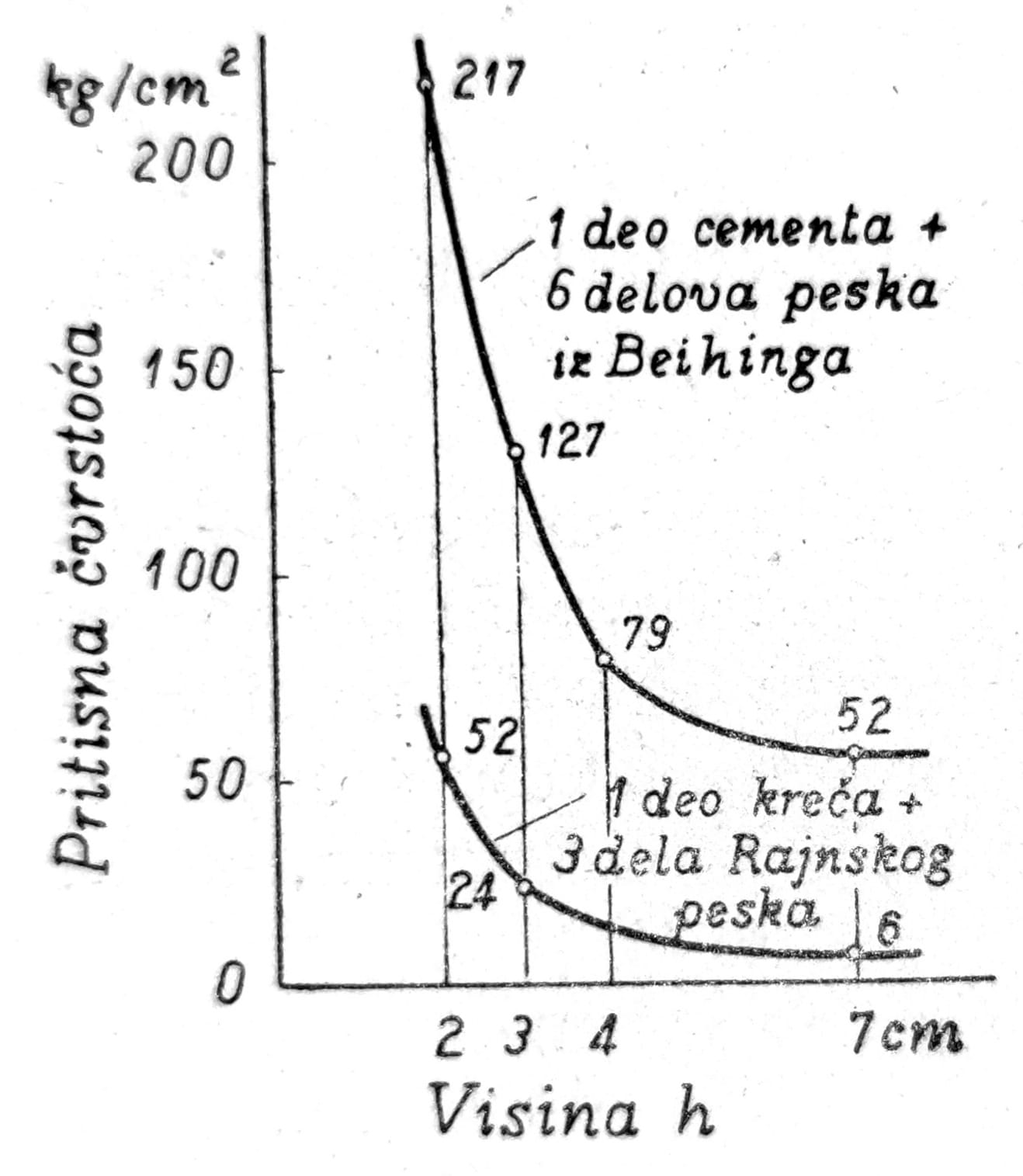
Figure 1 — Compressive strength depending on the height of the test body
Shrinkage and swelling of lime plasters
When the lime slurry or lime mortar dries out and hardens, a marked decrease in volume can usually be observed to a greater or lesser extent. The initial reduction in volume before hardening, i.e. still very plastic mortar, is called shrinkage. The decrease in volume due to drying of the hardened mortar is referred to as shrinkage. If, due to the wind and the sun, or due to a dry substrate, the freshly applied mortar dries quickly, cracks occur due to subsidence. If the shrinkage of the hardened mortar is prevented, tensile stresses occur in the mortar, and under unfavorable circumstances, cracks due to shrinkage.
Volumetric changes due to settling and shrinkage are different for different types of lime; they also depend on the composition of the mortar; fat mortars shrink more than those that need less water. The coefficient of shrinkage will be large in dry rooms that are heated in winter; this coefficient will be much lower for mortars that are exposed to the weather; in the same way, there are differences in the open space, because the weather influences the degree of drying of the lime plasters.
Volume stability of lime plasters
When talking about volume stability, it should not be thought that it is about the volume changes discussed above, but about additional volume changes that threaten the durability of lime mortars. In doing so, two conditions should be distinguished. The first one refers to the application of lime, which should be sufficiently slaked so that failures of the kind that can be seen in Fig. do not occur. 2.
On the basis of these experiences, it should be demanded that lime is not used in the fresh state in which it comes from the factory, as well as that the mixed lime mortar, before it starts to be installed, must be left in the trough for a long enough time, so that even those unslaked particles can be extinguished afterwards.
After that, the volumetric stability test comes into consideration in the sense that it is performed when testing cements. In doing so, it will be found out whether the composition of the lime is such that cracks, weathering and other impermissible volume changes will not appear over a long period of time.
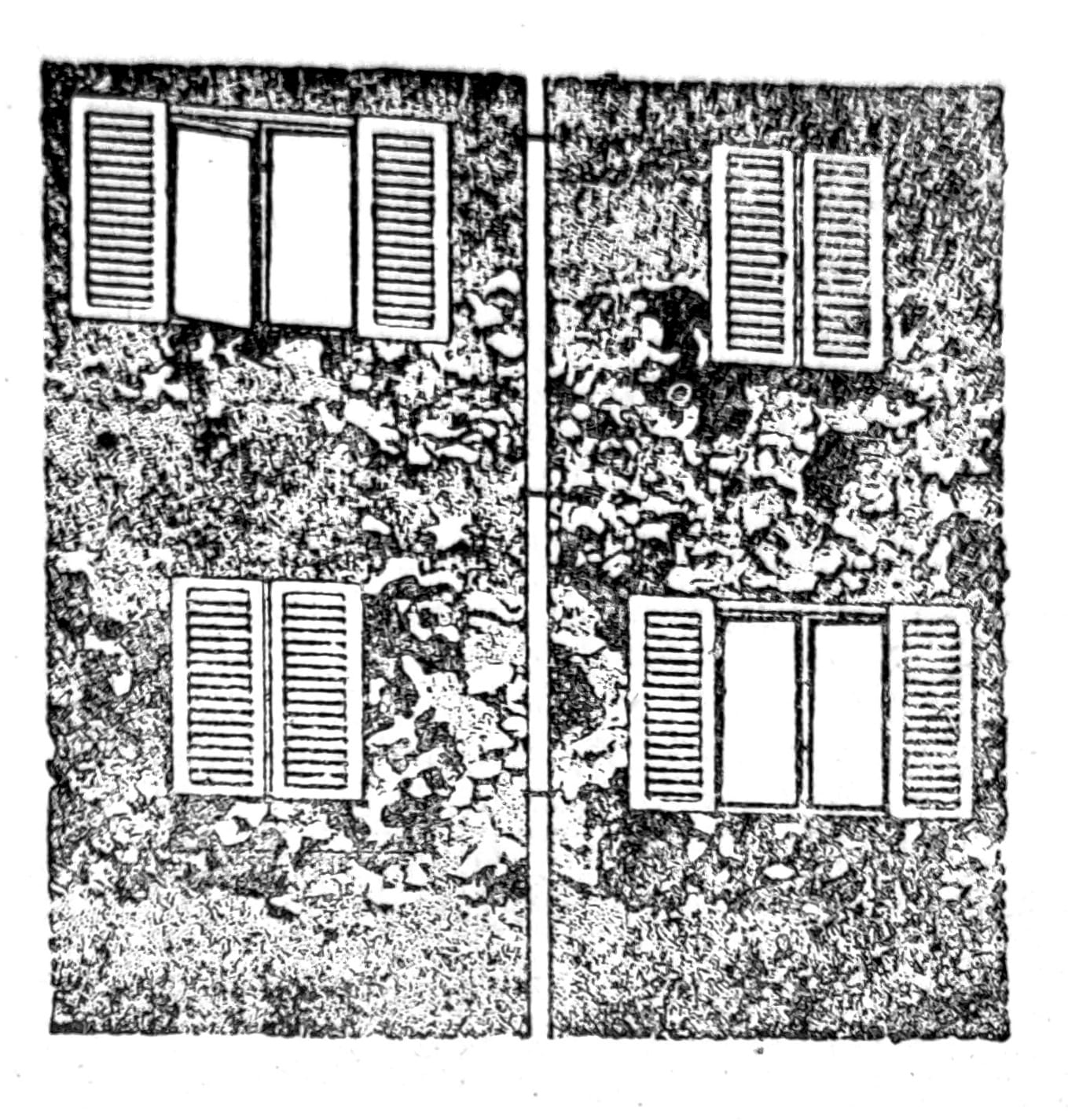
Image 2 — Mortar damage associated with insufficiently slaked lime