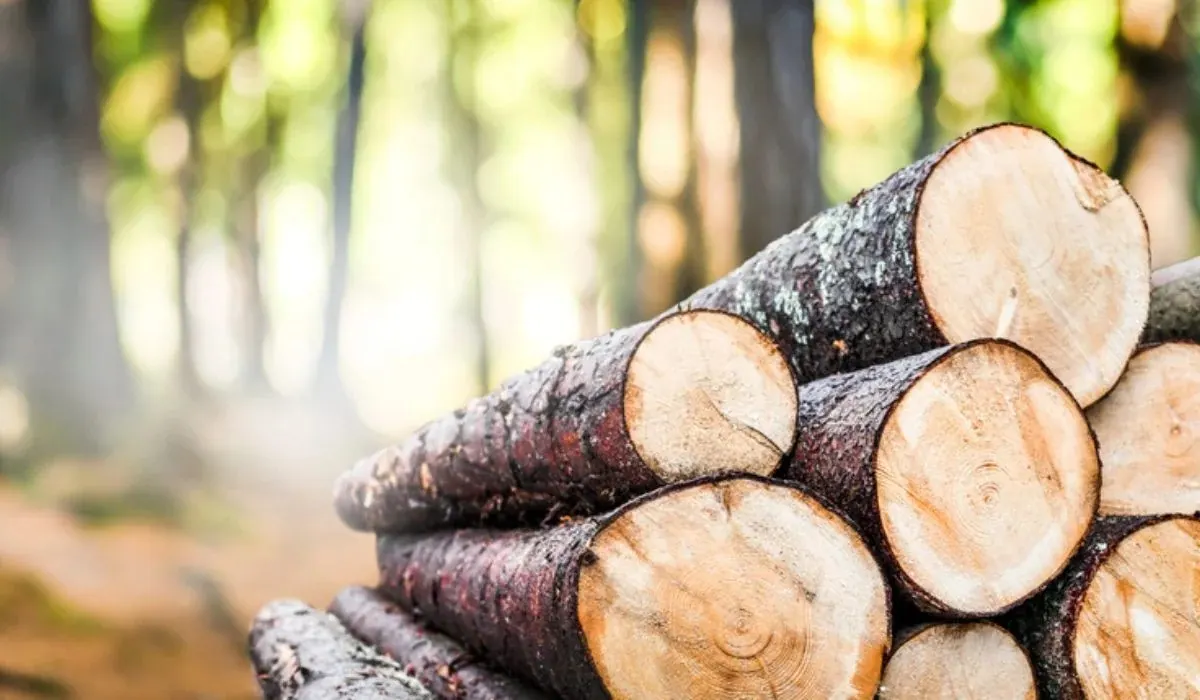
Wood is a versatile and widely used material, with applications ranging from construction and furniture production to handicrafts and artistic projects. One of the key factors that significantly affects the characteristics of wood is its moisture content. The moisture content of wood plays a key role in determining its strength, durability and suitability for different purposes. Wood moisture refers to the amount of water present in its cellular structure. It is usually expressed as a percentage of the weight of the wood in relation to the weight of the water it contains. Wood moisture is a dynamic property that changes with environmental conditions such as air humidity and temperature.
Water in the structure of wood
The water found in wood can be divided into three categories: free water, adhesion water and chemically bound water. Free water is the most harmful to wood; it moves through the vessels of the wood mass and is present in the wood in an amount corresponding to its cavities. Adhesion water is physically bound water that makes up the wood fibres. Chemically bound water is part of the cells that form wood. During drying, free water evaporates first, followed by adhesion water. Chemically bound water cannot be removed from wood by the drying process.

Wood in construction
The amount of water in wood almost always has to be controlled before it is used further in construction. Wood with a high moisture content is susceptible to fungal growth and decay, which compromises the integrity of the building. For this reason, wood must undergo a drying process. Depending on the application and the place where the wood will be used, the moisture content of fresh wood must be reduced to an appropriate value. Drying improves the physical and mechanical characteristics of wood, such as thermal-insulation characteristics and adhesion with glues, increased strength and resistance to decay, reduced electrical conductivity and easier application of protective coatings.
Wood can be dried naturally or artificially. Natural drying of wood is carried out by arranging wood in stacks in an open or covered area. This is an economical process because it does not require additional energy, but for the same reason it is slow, requires a great deal of free space and presents a fire hazard. This drying method can produce wood with a moisture content of 15%, while the thickness of the wood determines how long it will dry, from several weeks to a year and a half. Artificial drying is carried out in timber kilns operating periodically or continuously, with natural or forced circulation of air and water vapour. The wood is first heated with steam at a temperature of 70–80 °C and is then dried with dry air at a temperature of 50–60 °C.


The appropriate final condition of wood depends on the moisture content and temperature of the surrounding air because wood is a highly hygroscopic material: it can release water into the surrounding air or absorb water from it until equilibrium, or hygroscopic, moisture is reached. Equilibrium moisture is the moisture level that results from prolonged exposure of wood to air. Depending on the conditions in which a wooden structure will be located, the moisture content of the wood should be: 6–12% for structures in heated rooms; 9–15% for structures in enclosed, unheated rooms; 12–22% for structures outdoors; and 30% for structures in water.
Shrinkage and swelling
Wood has the often very inconvenient property of decreasing in volume as it dries, meaning that it shrinks. Shrinkage begins as soon as the moisture content of the wood is not sufficient to protect fibres whose saturation ranges from 25% to 30% water content; as the moisture content decreases further, the volume of the wood also decreases. Wood shrinkage differs in the three principal directions: it is greatest in the direction tangential to the growth rings, smaller in the radial direction, by about one half, and by far the smallest or practically negligible parallel to the fibres.
To limit changes in the volume of timber during use, changes across the fibres are prevented by gluing another piece of wood with its fibres arranged transversely. Technical wood is divided in various ways for this purpose, including composite wood such as panel boards, veneer boards and layered technical wood. In addition, changes in volume can be reduced to a greater or lesser extent if the wood is protected with substances that prevent water absorption, as well as with bituminous and other coatings.

The opposite of shrinkage is the swelling of wood: an increase in its linear dimensions and total volume due to increased moisture. Swelling is harmful to all forms of wood, and in this case its effect on parquet flooring is important to highlight. Swelling causes deformation and warping of wood in the form of bowed or twisted surfaces. This equally affects the aesthetic appearance and protection of the parquet: the wood’s finishing coatings separate and crack. In addition to its effect on the visible appearance of parquet, swelling reduces the strength of wood, weakening the structure and increasing its susceptibility to breakage.

Understanding and controlling the moisture content of wood is essential for ensuring the quality and longevity of products made from this natural resource. Whether you are a joiner, builder or hobby enthusiast, an informed approach to moisture content and the use of appropriate measurement methods will contribute to the success of your projects and to the overall sustainability of the wood-based industry.
If stable and properly dried wood is important to you, see our wooden windows, wood-aluminium windows and request a quotation.