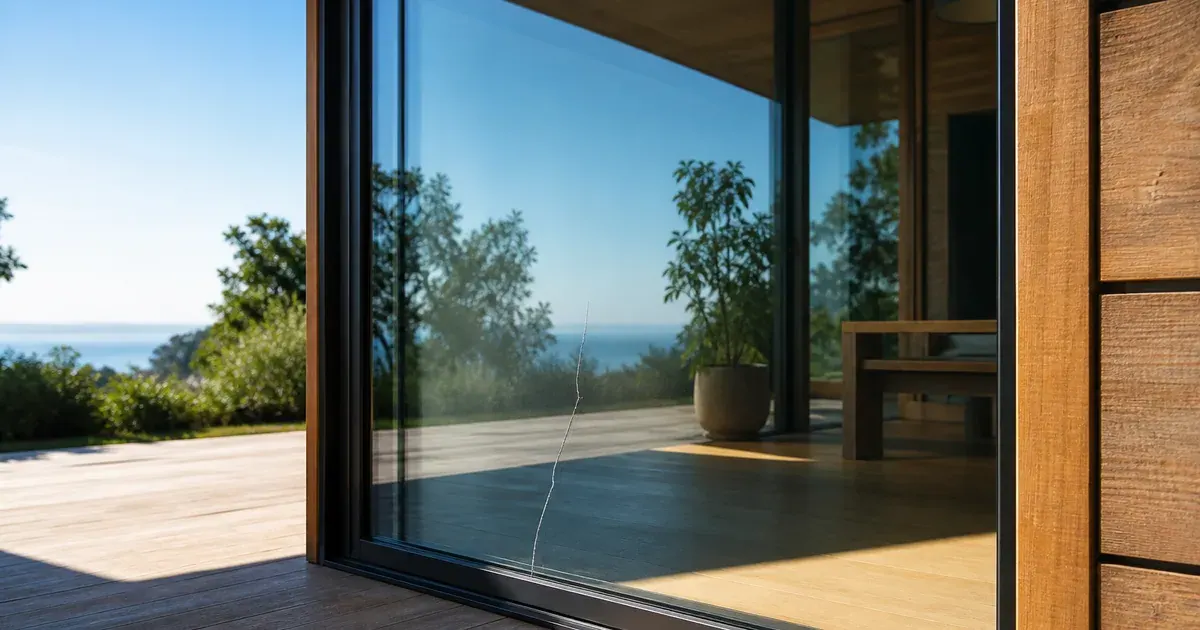
Why does glass break by itself? Although it may look that way, there is usually a reason. In this article, we explain one important cause—thermal glass breakage—and ways to reduce the risk.
When glass breaks without a visible impact, people most often say that it broke “by itself”.
However, glass almost never breaks without a reason. One possible cause is thermal glass breakage, which occurs when different parts of the same glass surface heat up unevenly.
This does not happen only during transport or storage. Thermal breakage can also occur later, when the glass has already been installed in a window, door or large sliding glass wall.
That is why it is important to know what presents a risk and how proper use can reduce the possibility of damage.
What exactly is thermal breakage?
Like most materials, glass expands when it is heated and contracts when it cools.
The problem arises when one part of the glass becomes very hot while another part remains considerably cooler. The warmer part tries to expand, but the cooler part of the glass prevents it from doing so. This creates internal stress in the glass.
If that stress becomes greater than the glass can withstand, the glass may break.
The crack most often starts at the edge, because the edge is the most sensitive part of the glass, and then spreads towards the centre.
At first glance, it can therefore seem that there was no reason for the breakage. There is no impact, no stone and no visible damage. However, the glass had previously been exposed to a large temperature difference.
The greatest problem is not high temperature, but uneven heating
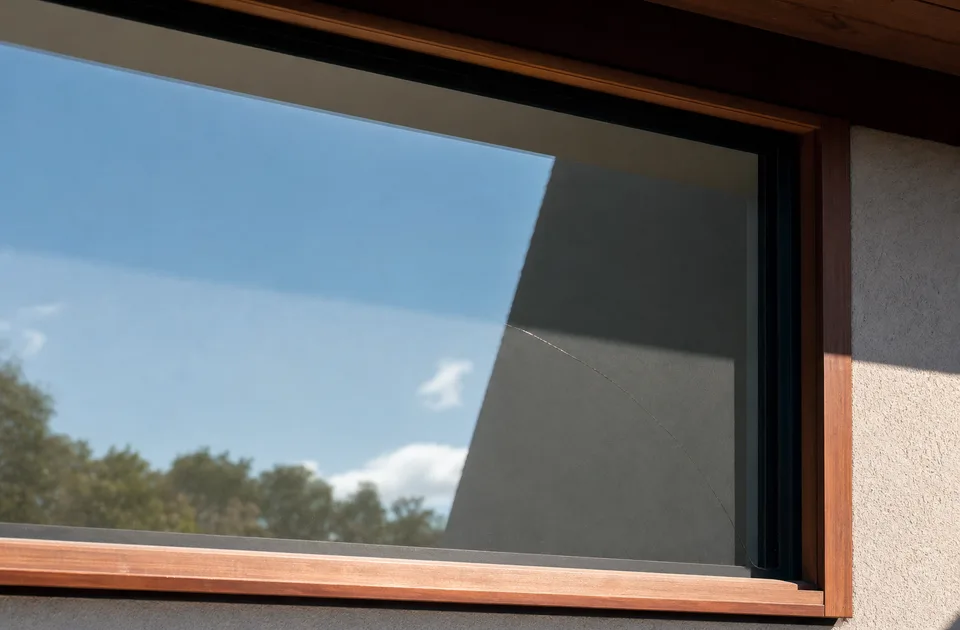
Figure 2 – A sharp boundary between sunlight and shade creates a temperature difference
It is often believed that glass can break thermally only when the outdoor temperature is 35 or 40 degrees.
That is not entirely correct.
What matters much more is the temperature difference between individual parts of the same glass surface.
For example, one part of the glass may be exposed to direct sunlight for hours while another part remains in the shade of a canopy, roller shutter, wall or another glass sash.
The sunlit part heats up and expands while the shaded part remains cooler. It is precisely this difference that creates stress.
Thermal breakage may therefore also occur on a sunny winter or spring day. The glass may be very cold after the night, and then the morning sun suddenly heats only one part of it.
Put simply, the glass does not care which season it is. What matters is how quickly and how unevenly its temperature changes.
Professional sources, such as the Pilkington guidance on thermal safety, confirm that the temperature difference between parts of the same glass surface is decisive, rather than only the outdoor temperature.
Special care with large sliding glass walls

Figure 3 – Heat can be trapped between overlapping sliding sashes
Large sliding glass walls are very popular today because they provide plenty of light, a beautiful view and a sense of greater space.
However, because of the large glass surface and the way they open, they need to be used properly, especially on sunny and hot days.
In a sliding wall, one sash often moves in front of or behind another sash when it is opened. The two glass surfaces then overlap partially or completely.
If the sashes remain in that position in direct sunlight for a long time, a large amount of heat can be trapped between them.
The sun’s rays heat both glass surfaces, while the space between them is narrow and often does not have enough airflow to release the heat quickly.
That space can then behave like a small glass chamber in which the temperature rises much higher than we would expect from the outdoor temperature alone.
At the same time, the part of the glass overlapped by the other sash may have a different temperature from the part directly exposed to the sun.
This produces a combination of two unfavourable effects:
- heat is trapped between the overlapping sashes;
- different parts of the glass heat up unevenly.
Thermal breakage may occur under such conditions.
Can glass really break because a sliding sash was left open?
It can, especially if the sashes overlap for a long time in strong direct sunlight.
Of course, this does not mean that every sliding wall will break as soon as it is opened. The risk is influenced by many factors:
- type of glass;
- size of the glass surface;
- composition of the insulating glass unit;
- type of coating on the glass;
- quality of edge processing;
- position of the building;
- direction the glass faces;
- intensity of solar radiation;
- duration of exposure;
- possibility of airflow between the sashes;
- presence of roller shutters, curtains, canopies and other sources of shade.
The risk is greatest when large glass sashes overlap completely or partially, are exposed to strong sunlight and the heat between them has nowhere to escape.
For this reason, it is not recommended to leave sliding sashes overlapping for hours on very sunny days.
When there is no need for that position, it is best to return the sash to the closed position or position it so that two glass surfaces do not overlap in the sun for a long time.
What else can cause thermal stress?
Sliding walls are not the only situation in which uneven heating of glass can occur.
A similar problem can also arise with ordinary windows, balcony doors and fixed glass surfaces.
Partially lowered roller shutters
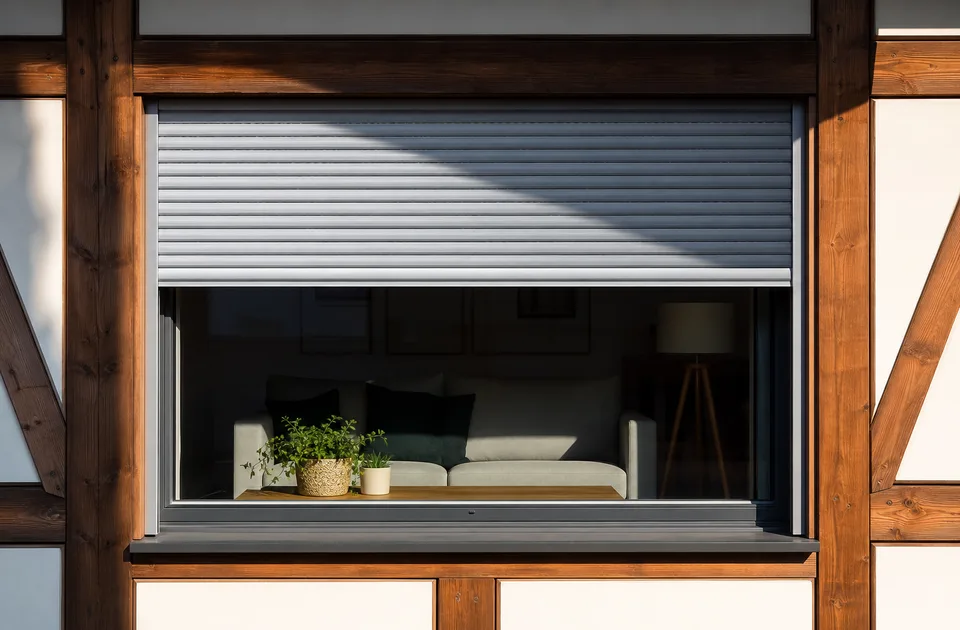
Figure 4 – A half-lowered roller shutter can shade only one part of the glass
One common example is a roller shutter lowered only halfway down the window.
One part of the glass is then completely in the shade while the other is directly exposed to the sun. A large temperature difference may develop between these two parts.
This does not mean that roller shutters should not be used. On the contrary, external solar protection is very useful because it prevents a large part of the sun’s heat from entering the room.
However, during strong solar radiation, it is better to avoid leaving the roller shutter for a long time in a position that casts a sharp shadow over only one part of the glass.
Uniform shading is more favourable than a situation in which half of the glass is very hot and the other half is cool.
Curtains and internal blinds directly next to the glass
Heavy curtains, roller blinds and internal blinds can trap heat between themselves and the glass.
The sun’s rays pass through the glass and heat the space behind it, but the curtain prevents the heat from escaping easily.
The risk is greater when the curtain is very close to the glass and covers only part of it.
It is therefore advisable to leave enough space between the glass and the internal solar protection so that air can circulate normally.
Furniture and dark objects next to the glass
Large glass surfaces often extend almost to the floor, so sofas, armchairs, boxes, cushions or other objects are placed next to them.
Dark objects absorb solar energy and can additionally heat the area immediately next to the glass.
If an object is placed directly next to the surface, the part of the glass behind it may have a considerably different temperature from the rest.
It is therefore not good to lean furniture, boxes, dark cushions or other large objects directly against sunlit glass.
Films, stickers and posters
Films, advertising stickers, posters and other decorations applied later can also change the way the glass absorbs and releases heat.
A particular problem arises when only one part of the glass is covered.
That part may heat differently from the rest of the surface, especially if the film is dark or absorbs solar energy strongly.
Not every film is suitable for every insulating glass unit.
Before applying film, especially to double- or triple-glazed units, it is necessary to check whether the specific product is intended for that type of glass.
Heaters, radiators and other heat sources
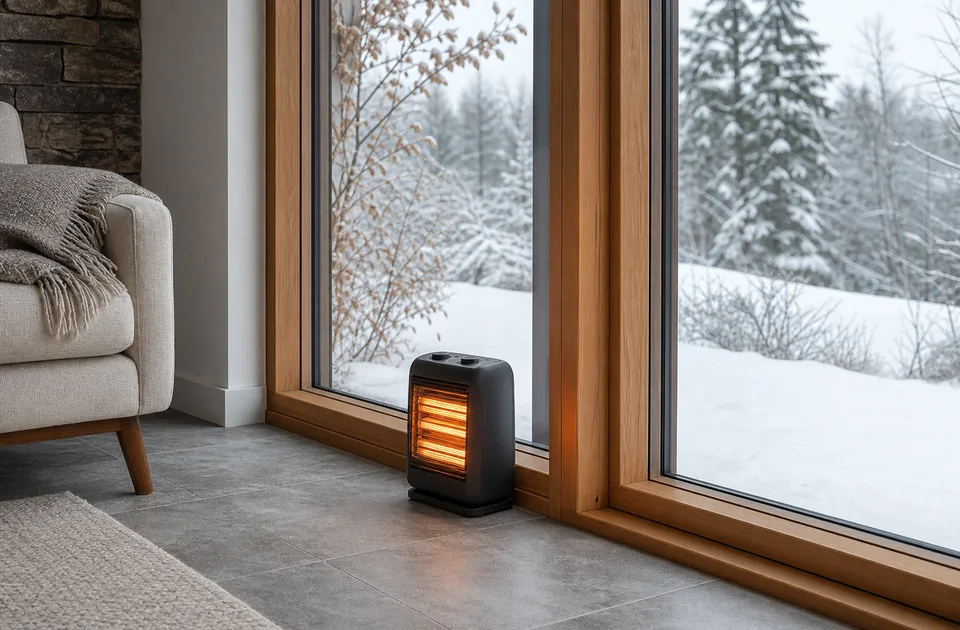
Figure 5 – A local heat source should not be placed immediately next to the glass
Glass should not be exposed to a strong local heat source.
A heater, fan heater, radiator, spotlight or warm-air outlet can heat only one part of the glass surface.
While that part heats quickly, the rest of the glass remains cooler, creating additional stress.
The same applies to sudden cooling.
For example, very hot glass should not be sprayed with ice-cold water, nor should very cold glass be cleaned with hot water or steam.
For cleaning, it is best to use water at a moderate temperature and avoid sudden temperature changes.
Shade from a canopy, balcony or neighbouring building
Uneven heating does not have to be caused only by curtains and roller shutters.
A sharp boundary between sunlight and shade can be created by:
- a canopy;
- a balcony;
- a deep window reveal;
- a railing;
- part of a façade;
- a tree canopy;
- a neighbouring building;
- an object placed in front of the window.
As the sun moves during the day, the shadow across the glass also moves.
At a certain moment, one part of the glass may be very hot while another is still in the shade.
Are all types of glass equally sensitive?
No.
Tempered and heat-strengthened glass have greater resistance to temperature differences than ordinary annealed glass.
Such glass is therefore used in locations where greater thermal or mechanical loads are expected.
However, even tempered glass is not indestructible.
It can break because of a strong impact, a damaged edge, improper installation, a large mechanical load or other causes.
Its advantage is that it is more resistant and, when it breaks, it disintegrates into a large number of smaller pieces that present a lower risk of serious injury.
It is also important to know that laminated glass is not automatically resistant to thermal breakage.
If laminated glass is made from two annealed glass panes, one of them may still break because of thermal stress. The interlayer between the panes helps the pieces remain attached after breakage instead of scattering.
For that reason, the choice of glass should be made at the design stage, according to its size, position, orientation and expected manner of use.
What does a thermal crack look like?
A thermal crack often starts at the edge of the glass and initially enters the surface at approximately a right angle.
It may later change direction, branch or continue towards the centre.
However, it is not always possible to determine the cause of breakage with certainty from appearance alone.
A crack may also result from an impact, previous edge damage, pressure from the structure or improper installation.
For a reliable assessment, it is therefore best to have the glass inspected by a qualified person.
What should you do if the glass breaks?
If the glass breaks, do not immediately try to remove or move it.
First secure the area so that people, especially children, cannot approach it.
Do not touch sharp edges with bare hands and do not try to remove large or unstable pieces yourself.
It is useful to photograph:
- the entire glazed structure;
- the point where the crack started;
- the position of the sliding sashes;
- the position of roller shutters and curtains;
- objects that were next to the glass;
- the shadow falling across the surface at that time.
Such photographs can be very helpful when determining the possible cause.
Proper storage before installation
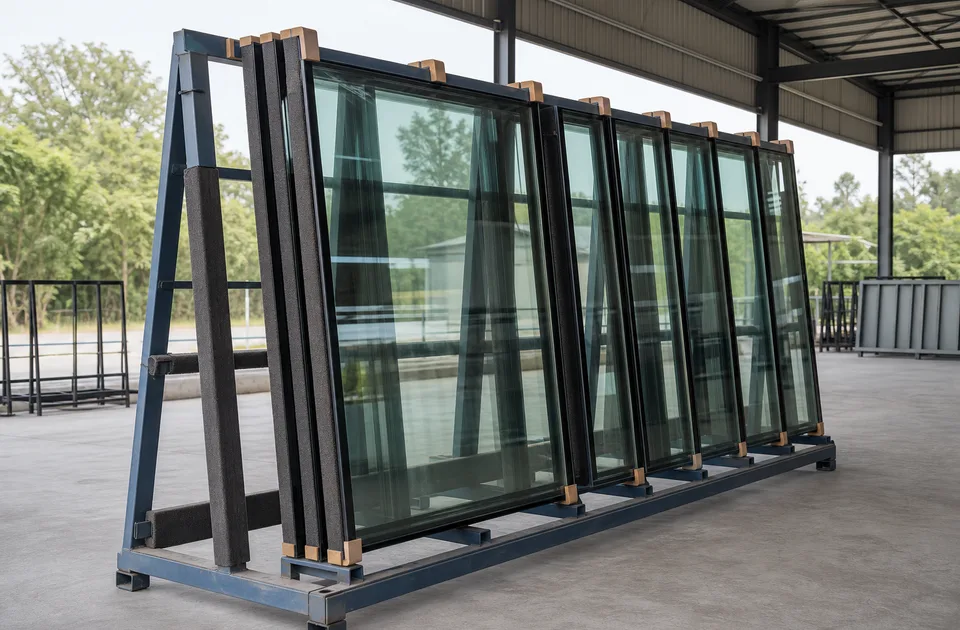
Figure 6 – Insulating glass units are stored upright, securely and away from direct sunlight
The risk of thermal breakage also exists before the glass is installed.
During the summer months, particular care should be taken over where and how insulating glass units are stored.
Packs of glass must not be left in direct sunlight, especially if the panes are densely stacked next to one another and covered with transparent film.
Transparent film does not provide reliable protection from the sun. In some cases, it can additionally trap heat and create an effect similar to a greenhouse.
The outer panes in a pack may heat more quickly than the inner ones while heat is trapped between the panes. This creates large temperature differences and additional stress.
The glass should therefore be:
- kept in a covered and dry place;
- protected from direct solar radiation;
- kept away from heaters and other heat sources;
- stored upright on suitable and stable supports;
- protected from impacts and edge damage;
- covered in a way that allows air to circulate under the cover;
- gradually adjusted to the conditions at the installation site before installation.
If there is a large difference between the storage temperature and the temperature at the installation site, the unit should be allowed to acclimatise gradually.
Sudden temperature changes should be avoided.
The most important rules for everyday use
Most problems can be avoided with a few simple habits.
During strong sunlight, do not leave sliding glass sashes fully overlapping one another for hours.
Avoid leaving roller shutters and blinds for a long time in a position where only one part of the glass is in the shade.
Leave enough space between the glass and curtains so that air can circulate.
Do not lean dark objects, boxes, furniture or cushions directly against a sunlit glass surface.
Do not apply unverified films or dark stickers to the glass.
Keep heaters, spotlights and other strong heat sources at a sufficient distance.
Do not cool heated glass suddenly with very cold water.
If you notice edge damage, an impact mark or the beginning of a crack, contact the manufacturer or a qualified person.
Conclusion
Modern insulating glass is designed to withstand sun, rain, wind and changing seasons for years.
However, even high-quality glass is not resistant to every situation.
The greatest problem is not merely a high temperature, but the fact that different parts of the same glass surface can heat at different rates.
Particular attention should therefore be paid to large sliding glass walls, overlapping sashes, partially lowered roller shutters, curtains next to the glass, films applied later, local heat sources and objects that prevent the surface from cooling normally.
Thermal breakage often looks as though the glass broke for no reason.
There usually is a reason.
The good news is that proper storage, an appropriate choice of glass and a few simple habits can considerably reduce the risk.
Planning new windows and doors? See our wood-aluminium windows and wood-aluminium sliding doors, or send us an enquiry for advice and a quotation.