Until now, there has been no text like this that talks in a simple and concise way about which glass to choose for carpentry. You will receive a specific answer and explanation, which is written in such a way that everyone can understand it. Text can save you a lot of money, but also shatter the beliefs of 95% of people.
Glass occupies the largest area of the window (opening). As important as it is that the wooden profiles seal together, it is just as important that the glass does not emit heat from the room in winter and coldness in summer.
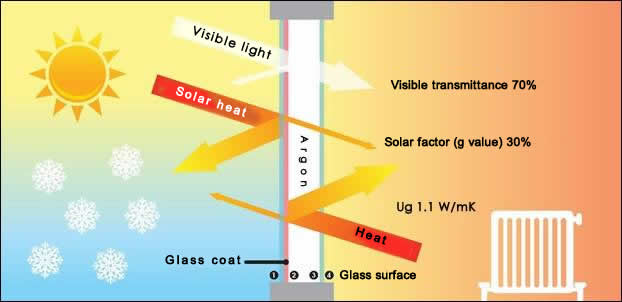
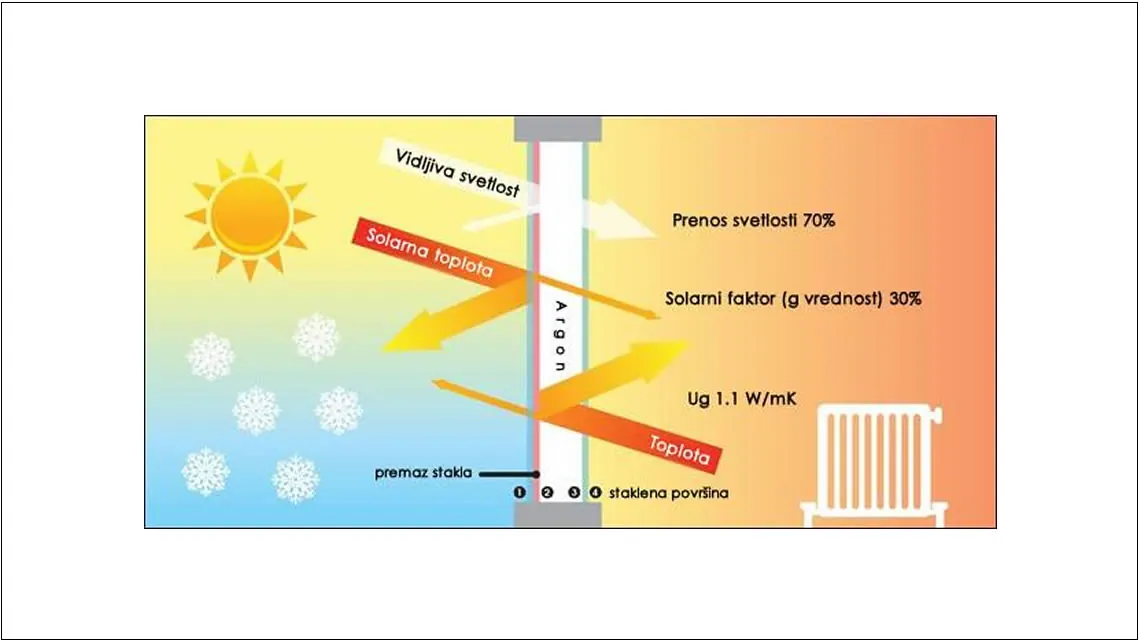
Figure 1 – Ug and g factors
Therefore there are two factors that define these values:
Ug factor represents the loss of heat (energy) from the room. If there is a room that is heated in winter, this factor will show how much heat passes through the glass and goes outside.
Professional: Ug - heat transfer coefficient, expressed according to the EN-673 standard, whose unit is W/m2K. The lower the U-value, the better the thermal insulation ability.
G factor is the passage of heat into the room. Contrary to the first case, when we have an air-conditioned room in the summer, this factor tells how much heat passes through the glass.
Expert: g - total passage of solar energy through the glass. It is expressed according to the EN-410 standard. The lower it is, the less the heating of the interior space.
Let’s go in order.
Single layer glass.
For example in summer, when temperatures are between 35o and 40o, the heated glass transfers its heat into the room. If that glass is single (say 3mm thick), it will conduct 100% of how much it heats up. Here, we should immediately emphasize this “from how much it warms up” and say that if it is outside e.g. 40 degrees, it will not necessarily be 40 degrees inside, but it will be as much as the glass itself manages to heat up (slika 2), because it actually emits that heat (which in the case of a single glass will be 100% of heating). It’s like having a glass surface heater in the room. This is a case of heat transfer from outside to inside (G factor).
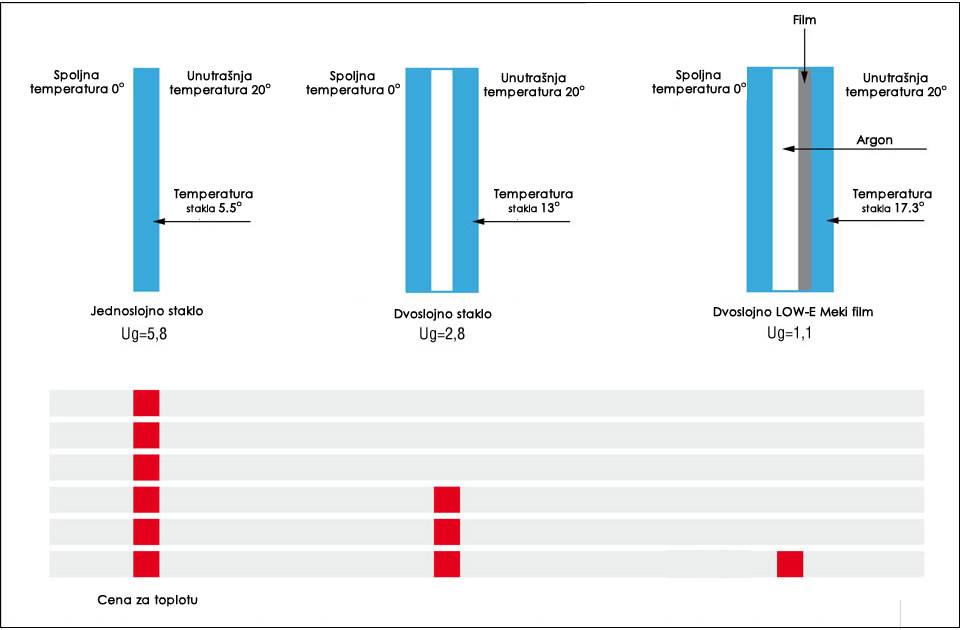
Figure 2 - Glass temperature at 0°C outside and 20°C inside
When it comes to the passage of energy from the inside to the outside (Ug factor), in the case of single glass it is about 83% of the energy. That is, 83% of the cold (in summer) is lost outside.
Now we come to what the Ug coefficient actually is. For this kind of glass, people then said that its Ug is 5,3 to 5,8. These are the coefficients that are displayed as glass conductivity coefficients.
We have this kind of glass on old houses. Given that these energy losses are too high, double-glazed windows were made (two separate wings, one behind the other) and we still have such windows today on some houses and buildings (slika 3). Then the next step towards improvement was made, which is…
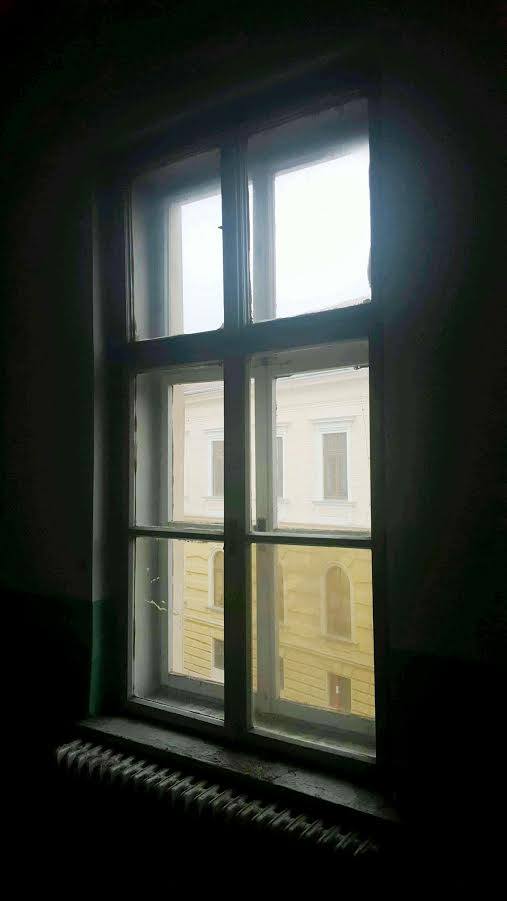
Figure 3 – Older window variants with double sashes
Double layer (double) glass
Glass that is actually made of two glasses, and between them a molding of e.g. 16 mm (4+16+4).
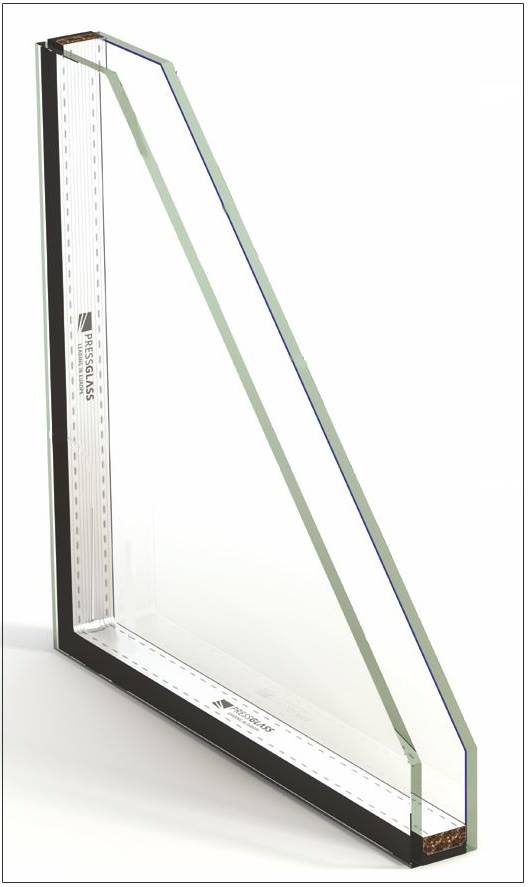
Figure 4 - Two 4 mm glass panes separated by a 16 mm spacer
The first and last values “4” indicate the glass thickness of 4mm, and the middle value “16” indicates the thickness of the molding that is between them. The thickness of the molding can vary from 6mm to 24mm, but the distance that gives the best results and where the results are best is the distance (molding) of 12-16mm. Just as the moldings of 6,8,9, mm are not good, so these of 22, 24mm are not good either (we in the company would say “they also fail”). Now that we know what each label means, it’s the right time to give a table that we can follow.
| TYPE OF GLASS | Ug AIR | Ug ARGON | ARGON ENHANCEMENT | SOLAR FACTOR g-value | LT-LIGHT TRANSMISSION |
|---|---|---|---|---|---|
| Single from 3 – 19mm | 5,8 – 5,3 | – | – | 83 | 89% |
| Missing 4+16+4 Fleet | 2,8 | 2,6 | 7,15% | 77 | 82% |
| 4+16+4 Low-e Hard Film | 1,8 | 1,65 | 8,34% | 67 | 80% |
| 4+16+4 Low-e Soft film | 1,3 | 1,1 | 15,39% | 63 | 80% |
| Solar 4+16+4 Fleet | 1,3 | 1,1 | 15,39% | 42 | 66% |
| Sun Guard HP Bronze 40/24 | 1,4 | 1,1 | 27,27 | 27 | 40% |
| 4+16+4+16+4 Fleet | 1,8 | 1,7 | – | 72,2 | – |
We can see that after adding one layer of glass instead of the Ug value of 5.3, we got an improvement to 2.8. That is, instead of 100% of heat going out in winter, an improvement of 56% is obtained, and 77% of heat enters in summer. So we got a very big improvement by adding just one glass.
A logical conclusion is immediately imposed: “Well, then we add another layer of glass (three-layer glass) and we will get even better results!”, but that is not the case.
There are some optimal values that include heat/cool characteristics, sunlight, etc. and we will see that from this point, adding another layer of glass to the already existing two-layer can only be a marketing move, which the customer just has to pay well.
In addition to another layer on double-glazed glass, argon is also included in the story at this point, which is promoted a lot by people who deal with marketing in companies. We say a lot, of course there are reasons for praise, but certainly not as much as is said and the reasons mentioned are not completely true. In the table we can see that when argon is inserted into ordinary double-layered glass with a Ug value of 2.8, a Ug value of 2.6 is obtained. That small improvement of only 0.2 is paid much more than the actual improvement is gained. This improvement is only great in some cases, and we will explain in which later.
Of course, we write all this and relate it to double-layer glass, because it has a lot of “variations on the theme”. Let’s take the example of you coming to the glazier:
You: Good afternoon
Glazier: Good afternoon
You: I want an insulated glass unit with low-emissivity glass and argon filling
Glazier: Yes
The glazier didn’t lie to you. You got low emission (LOW-E) iso glass, argon filled, but he didn’t tell you it was hard film. On that glass we get Ug-1.8 and when it is filled with argon 1.6. And do you see in the table what are the values for low-emission glass with soft film (4+16+4 LOW-E SOFT FILM). That value, even without argon is Ug-1.3, which is better than hard film with argon, and the price is less. If that glass is also filled with argon, we get Ug-1.1. And here we come to the situation where argon means a lot. This value of Ug-1.1 is the required value in most laws of Western Europe that deal with the regulation of this area, where the glass is brought within the limits of permitted values and as such can be used in the construction industry. So argon is charged not so much because of insulation, as most people think, but because argon is actually a neutral gas - not aggressive like air. The film that is placed inside the glass (between two layers) is based on aluminum oxide, and if that space is not filled with argon, it is simply eroded over time by ordinary air and disappears, thereby losing the insulation and its values that we had at the beginning.
Also, there are advocates who, as an argument for not adding argon, cite the fact that argon “leaks” out of the glass over time, i.e. it disappears and we pay for filling with argon for nothing. This is true, but only partially. The amount of argon loss depends on the glass manufacturer, so companies that have a certificate that the argon loss does not exceed 3% for 10 years should be chosen for cooperation. This means that in 10 years we will not lose more than 3% of argon, and this loss is practically negligible and in real situations, argon outlives the glass.
There are also variants where the glasses are filled with krypton, but this is done if it is necessary to obtain better insulation with thinner glasses, but that will not be our topic now.
We will pay attention to this combination of glass. So 4+16+4 LOW-E SOFT FILM. Its value is Ug-1.1. This means that in winter 22% of heat goes outside, instead of 56%, but in summer 63% of heat enters inside. A big improvement over regular iso glass, but a small shift in g factor.
The laws here are mostly based on the Ug value, which refers to heat loss in winter, but people certainly want the comfort of use in summer, where they don’t want heat entering the room. Therefore, SOLAR 4+16+4 FLOT was created, where the characteristics remained identical to 4+16+4 LOW-E SOFT FILM, but the heat entry into the room in summer was reduced to 42%. This is the lower limit in the domain of transparent glasses. All other reductions and improvements in Ug and g factors begin to be reflected in the transparency of the glass (also known as untinted glass). This combination is the highest quality combination of transparent glasses, with the fact that we still have two layers of glass.
Triple Glass
We’re slowly coming to a conclusion, and he’s not going to support a rich neighbor who says, “I put the most expensive triple-glazed windows on my house. It doesn’t get any better than that.”
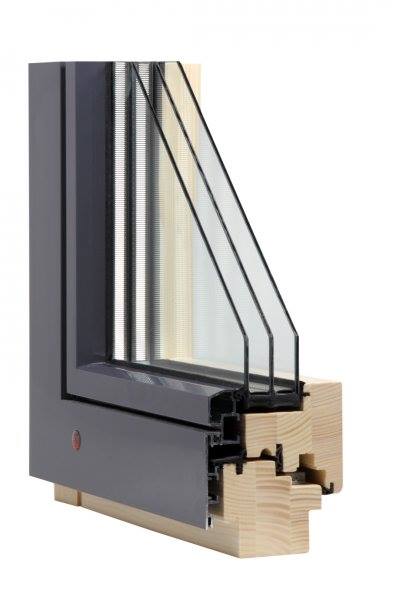
Figure 5 - Example of a window with triple glazing
Let’s go back to tabelu 1 and look at the values that triple-layer glass has. It is Ug-1.8 and g-1.7, and we achieved 1.3 and 1.1 on the double-layered glass and that with much less money, because such glass is much cheaper than triple-layered glass.
What have we done with triple glazing? We made the window/door more difficult, we raised the price…..and made a worse product.
Wait. Can soft film, argon, etc. be added here as well?
It can. If we take 4+16Argon+4+16+4LOW-E. In this case we will get Ug-0,8 and the g factor is also around 60% (nothing special).
The maximum improvement with triple-layer glasses, which we can get, is a combination of:
Solar4+16Argon+4+16+4LOW-E. Then Ug-0.6 is obtained, and the percentage of heat input is below 40%.
Let’s move on to…
Conclusion:
If you have carefully read the previous text and followed the table of factor values at the same time, the conclusion will already crystallize somewhere, as far as the whole story about glasses is concerned.

Two-layer low-emission glass, with a soft film, filled with argon is a combination that is better, and much more affordable, than ordinary three-layer glass. An additional benefit is the lightened wing, which extends the life of the window.
This fact initially causes suspicion among people, and those who do not understand the technology of glass manufacturing (and who still understands everything), easily fall for the sweet talk of people whose task is to reduce the inventory list.
Yes, but there are also triple-glazed units that, with the right combination, provide better performance than 4+16+4 LOW-E SOFT COAT!?
Yes, there are. They exist, but their price is incomparably higher than what such glasses manage to provide, and that’s the point. We would say that in such cases the price of glass (per m2) increases exponentially in relation to the quality obtained.
Get 4+16+4LOW-E SOFT FILM!
P.S.
You may be surprised by the fact:
You won’t be able to check for yourself which glass you got! There is a glass detector that can tell if you got regular double-glazed glass or some premium glass with a film, but it costs a few hundred/thousand euros. There is a method that can be performed in the laboratory, but who else first takes the window to the laboratory, pays the price of the test, and then installs it on the house or apartment.
We will protect ourselves by choosing a proven and well-known company with which we cooperate, because it does not pay to play with confidence. It is not worth it for the construction police in Austria to order it to remove windows from buildings or to change the already established system of production and installation.
If you are choosing glass for new joinery, take a look at our wood windows, wood-aluminum windows or send dimensions for quote.