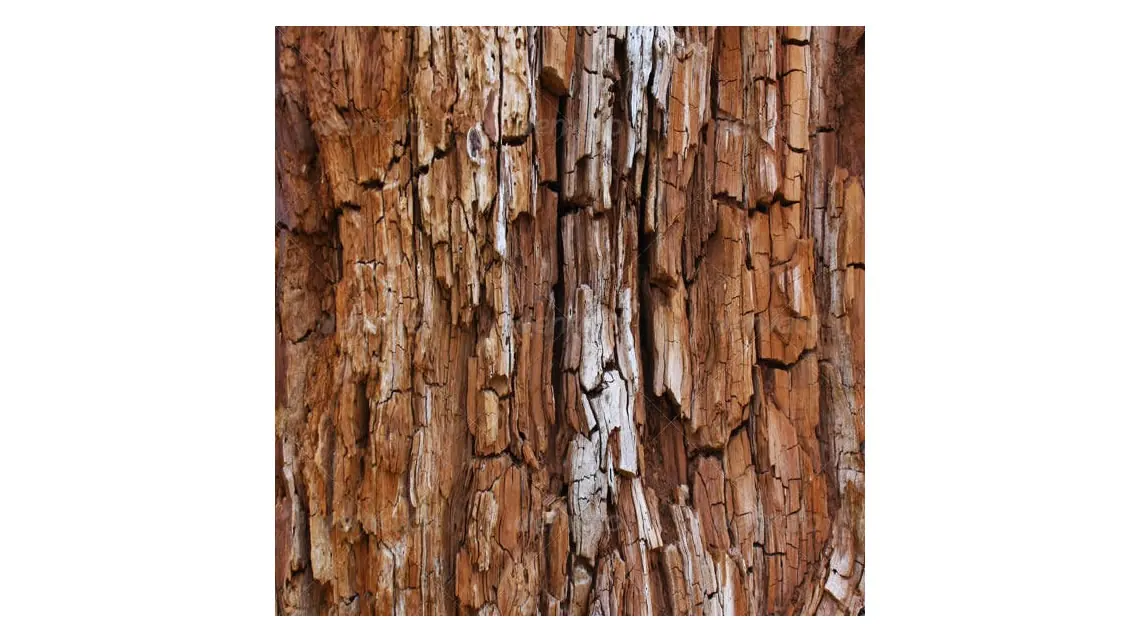
Wood is an organic material exposed to decay caused by destructive fungi when temperature and moisture are favourable for their development.
The first signs of fungi on wood may be mycelia, hyphae and sporophores — fruiting bodies. To determine the type of fungus that caused the decay, a sample of the affected wood must be examined under laboratory conditions.
Conditions in which house fungi develop
House fungi can grow and develop at temperatures from +2 to +35 °C, but the most favourable temperature for their development is from 18 to 20 °C, with moisture from 25 to 150%.
Wood dried to a moisture content below the hygroscopic limit, that is below 23%, has dry immunity against wood-destroying fungi. At moisture levels above 150%, wood acquires wet immunity against destructive fungi. The methods of dry and wet storage of wood in timber yards are based on the principle of dry and wet immunity.
Three groups of wood-protection measures
Measures for protecting wood against decay are divided into:
- structural measures;
- operational measures;
- chemical measures.
Structural measures
Structural measures provide for isolating wood from ground moisture, freezing, condensation of water vapour and precipitation, ventilating spaces below floors, and removing or isolating wood from chimneys so that it cannot catch fire.
Operational measures
Operational measures provide for protecting wood from becoming wet because of defects in the water-supply network, leaking roof coverings, gutters clogged with leaves and similar causes.
Parquet floors should not be washed with water because this strongly moistens the subfloors beneath them. They are poorly ventilated, dry slowly and may become infected by wood-destroying fungi. Wood infected by destructive fungi should not be brought into buildings, and buildings should be ventilated continuously.
Chemical measures
Chemical measures provide for treating wood intended for construction work with special antiseptics. These are divided into water-soluble antiseptics, various mineral oils and gaseous antiseptics.
Among water-soluble antiseptics, sodium fluoride (NaF) and sodium fluorosilicate (Na₂SiF₆) are used most widely. A 3% aqueous solution of sodium fluoride is most commonly used as an antiseptic for wood in construction.
Wood impregnation methods
Wood is impregnated by:
- immersion;
- the bandage method;
- the supercoating method;
- pressure impregnation;
- treatment with antiseptics using a brush or spray gun;
- the hot-and-cold bath method;
- treatment with antiseptic pastes.
Immersion
Immersion of wood in open masonry or concrete basins filled with antiseptic is used for impregnating telegraph poles, scaffold timber and other elements.
The immersion period is 7–8 days for pine and at least 10 days for spruce. With this method, the antiseptic penetrates 3–6 mm into the wood.
Bandage method
The bandage method is used mainly for impregnating telegraph and telephone poles. The end of a pole that is to be buried in the ground is wrapped in a bandage made of two layers of jute fabric or another material in which dry antiseptic is distributed evenly.
The fabric is sewn with twine so that the antiseptic cannot fall out, and its outer layer must be waterproof. Groundwater enters through the lower end of the pole, rises through the wood, dissolves the antiseptic and carries it upwards. The impregnation depth reaches 1–2 cm.
Supercoating method
In the supercoating method, a water-soluble antiseptic is mixed with an adhesive substance and applied to the surface of the wood. Over a longer period, it penetrates the interior of the wood.
Penetration takes place according to the law of diffusion, which makes it possible to impregnate wood with increased moisture content. Oily antiseptics cannot be used with this method.
Pressure impregnation
Pressure impregnation is used mainly for railway sleepers and may be carried out by the full-cell or empty-cell method.
Full-cell method
In the full-cell method, the wood is placed in an impregnation cylinder and kept under vacuum for 15–45 minutes to draw air from the pores in the surface layer of the wood. The cylinder is then filled with an aqueous antiseptic solution.
The temperature is 40–50 °C for aqueous antiseptics and 90–100 °C for oily antiseptics. When the cylinder has been filled with antiseptic, a pump creates a pressure of 8–20 atmospheres. The wood is kept under this pressure for 1–2 hours, depending on the cross-sectional size of the material being impregnated.
This method is expensive because it requires about 300 kg of antiseptic per 1 m³ of wood.
Empty-cell method
Impregnation by the empty-cell method requires considerably less oily antiseptic. The wood is kept in the impregnation cylinder under an air pressure of 2–4 atmospheres for 10–15 minutes. The cylinder is then filled with oily antiseptic heated to 95 °C.
A pressure of 7 to 20 atmospheres is created in the cylinder for 30 minutes. The antiseptic is then discharged and a vacuum of up to 55 mm of mercury is created for 15–20 minutes. Consumption of oily antiseptic is 70–75 kg per 1 m³ of wood.
The principle of the empty-cell method is based on the air in the pores of the wood being compressed by the initial pressure. During the vacuum in the final stage of impregnation, the compressed air expels antiseptic from the pores of the wood.
Application with a brush or spray gun
In construction, wood is coated with antiseptics using a brush or spray gun.
Air-dry wood intended for construction work — beams, battens, posts, floorboards, ceiling panels and other elements — is treated with a hot three-percent aqueous solution of sodium fluoride. Several hours after the surface of the wood has dried, the treatment is repeated.
Hot-and-cold bath
The hot-and-cold bath method is more effective. Air-dry wood is immersed in a tank filled with a three-percent aqueous solution of sodium fluoride at a temperature of about 95 °C. Depending on its cross-sectional size, it is kept in the antiseptic for about four hours.
The wood is then transferred to an antiseptic solution at a temperature of 20–25 °C, where it remains for 2–2.5 hours.
Oily antiseptics
Among oily antiseptics, creosote oil and carbolineum are used most widely for impregnating the lower ends of telegraph poles, the ends of beams buried in the ground, sleeper beams, railway sleepers and similar elements.
Because of their sharp, unpleasant odour, oily antiseptics must not be used to impregnate wood intended for residential buildings, fruit and vegetable stores or other premises for food products.
Antiseptic coatings and gaseous agents
Antiseptic coatings, silicate coating, extract supercoating and bituminous supercoating are also used for impregnating wood.
Antiseptic coatings are applied to the surface of the wood with a brush in quantities of 450 to 750 g per 1 m² of surface. Supercoatings are used to impregnate more important parts of timber, such as beam ends, truss supports and the ends of poles buried in the ground.
Gaseous antiseptics — chloropicrin, sulphur dioxide and others — are used rarely.
Selecting a protection procedure
The impregnation method is selected according to the conditions in which the wood is located.
For the use of wood in contemporary joinery, see our wooden windows and entrance doors, or send an enquiry through the contact page.