Types of woodworking
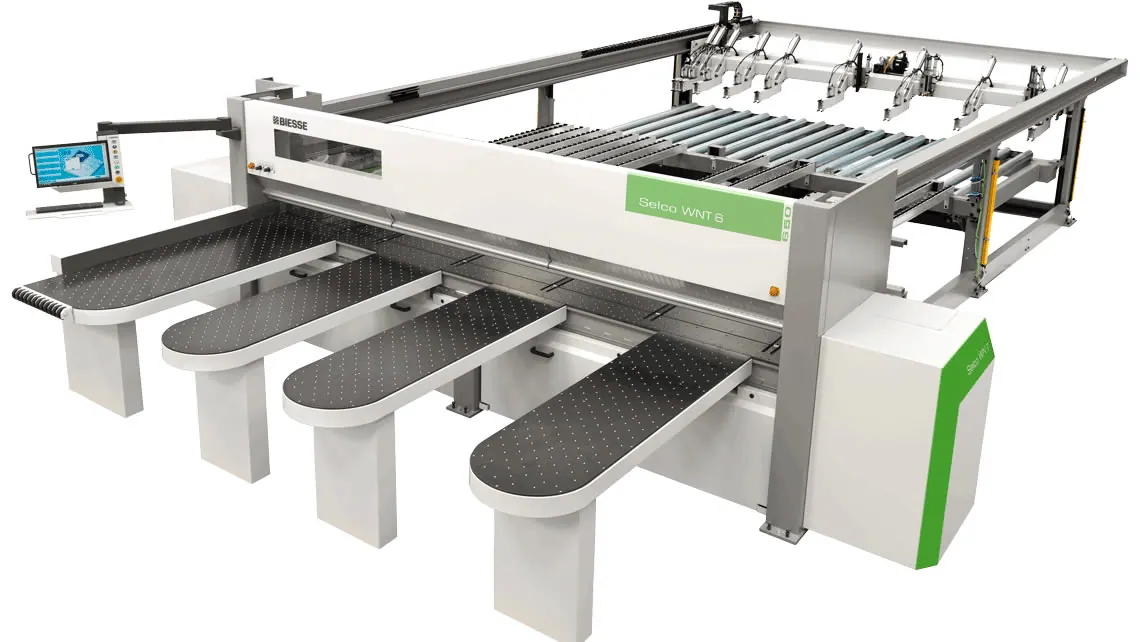
Woodworking is performed mainly using various woodworking machines. Hand-held carpentry tools are used as auxiliary tools for assembling and fitting products into grooves, etc. The following types of machining of wood are used: sawing, cutting, milling, mortising, drilling, planing and sanding (Figure 1). Frame saws, circular and point saws, cutting and scraping knives, milling cutters, drill bits, chains, chisels and abrasive paper are used as tools for sawing, cutting and smoothing.

Figure 1 — Types of woodworking: a — sawing; b — cutting; c — milling; d — sanding; e — scraping; f — sanding.
Blades and their angles
Cutting tools used for woodworking always have one or more wedges. For example, the teeth of frame, circular and band saws, the blades of scraping knives, the teeth of milling cutters, etc. have the form of sharp wedges that perform the cutting. In order for these wedge-shaped blades to cut wood with sufficiently high productivity and provide a satisfactory quality of processing, they must be positioned at a certain angle to the wood grain and have a specified size and shape.
The following blade angles are present on these cutting tools used for woodworking: the cutting angle, denoted by δ, the sharpening angle — β, the rake angle — γ, and the clearance angle — α. The sum of the clearance angle and the sharpening angle always gives the angle δ = α + β (Figure 2).

Figure 2 — Angular elements of the blade.
To achieve a high degree of surface finish on the wood and expend as little work as possible on cutting, the most favourable cutting angle, sharpening angle, rake angle and clearance angle must be selected according to the type of wood, its moisture content and the direction of cutting. The smallest sharpening angle is considered to be 30°; the direction-of-movement angle of the knife, or clearance angle, is taken as 10–15°; the cutting angle is taken as 45–74°.
Cutting direction in relation to the grain
There are three principal cases of cutting according to the direction of cutting in relation to the wood grain: end-grain, longitudinal and transverse cutting (Figure 3). Pure longitudinal, transverse and end-grain cutting is carried out very rarely because the knife is always positioned at a certain angle to the grain during operation.

Figure 3 — Three principal cases of cutting wood: a — end-grain; b — longitudinal; c — transverse.
Sharpening tools
Cutting tools are sharpened either on special sharpening devices or by hand, provided that after sharpening the cutting tool retains the original shape of the blade and the corresponding angular elements.
Related topics: band saws, circular-saw machines, sawn coniferous and deciduous timber, timber and production of wooden windows and doors.