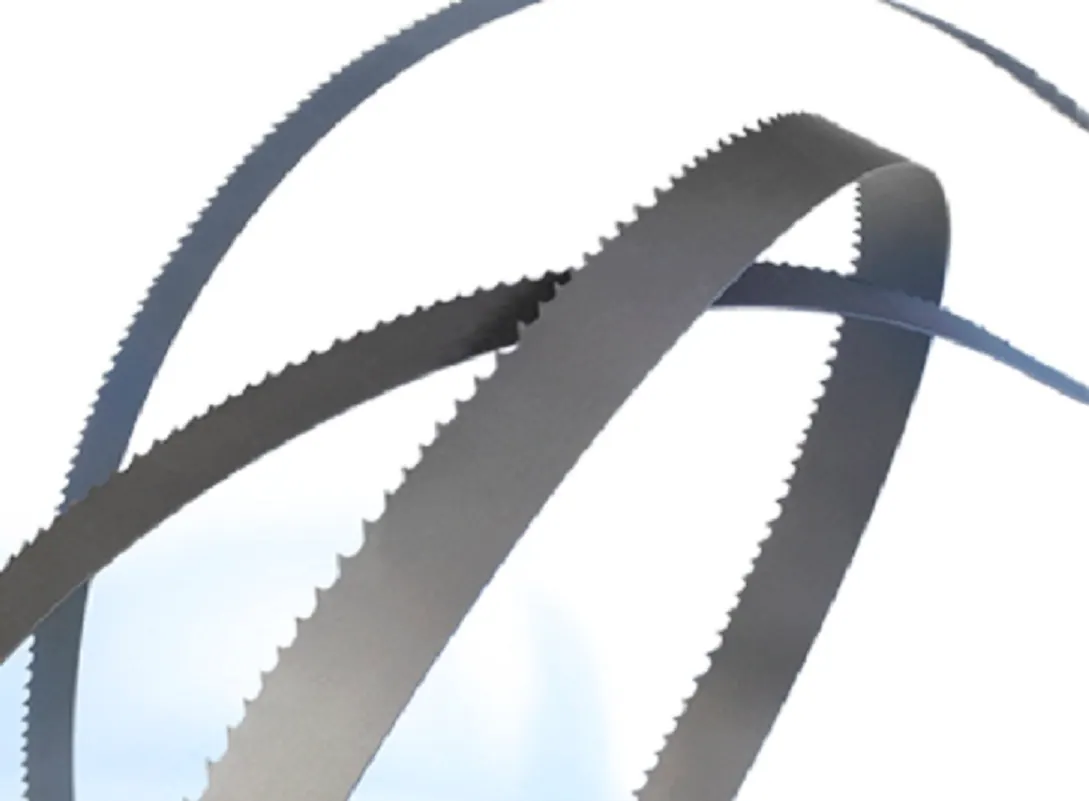
Types and application of band saws
Band saws are divided into vertical and horizontal heavy type for cutting logs into boards and beams, medium type vertical band saws for cutting beams and thick boards into thin and light type vertical band saws for cutting straight and curved boards and other elements.
With the help of band saws of heavy and medium type, unlike gutters, individual logs and beams can be cut into boards, taking into account defects and other characteristics of the logs. In addition, when cutting, they provide a smaller width of cut, so less wood goes into sawdust.
In the practical work of companies in the construction industry for wood processing, machines with band saws of the brands LC-70 and LC-80 were mostly used.
Band saw LC-80
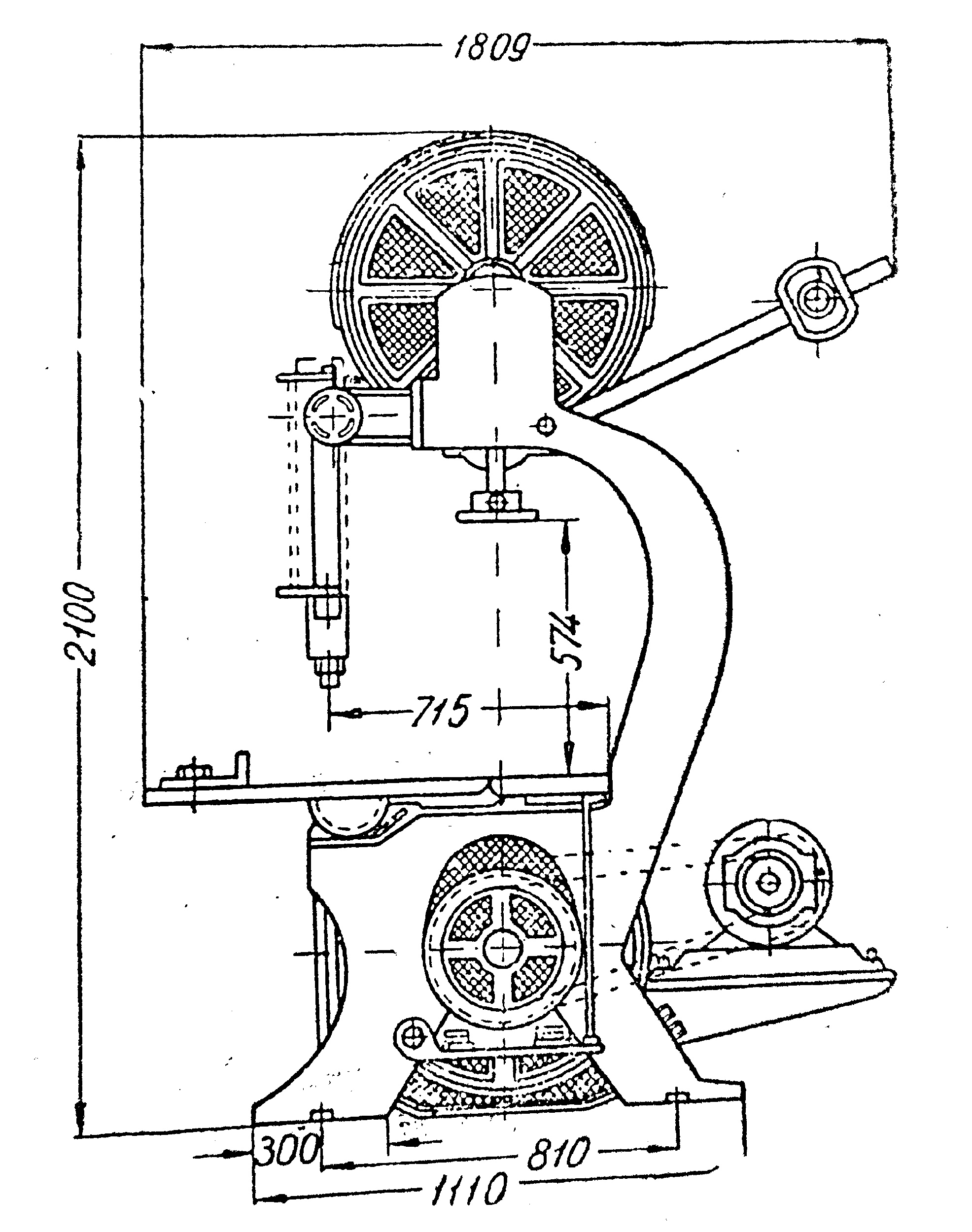
Figure 1 — LC-80 band saw.
The machine consists of a body, a rotary table, two saw wheels — a lower guide and an upper tensioner, a brake device and an electric motor.
Technical characteristics LC-80
- Diameter of the wheels over which the band saw goes: 800 mm
- Cutting width — pass: 715 mm
- Maximum cutting height: 570 mm
- Band saw blade width: up to 60 mm
- Band saw blade length: 3600–6000 mm
- Table dimensions: 945 × 970 mm
- Diameter of transmission wheel: 285 mm
- Wheel revolutions per minute: 620–800 mm
- Electric motor power: 3,2 kW
- Machine weight: 920 kg
On this machine, thick boards can be cut into thin ones using an additional mechanism. The machine cuts wood with a band-shaped blade.
Band saw blades
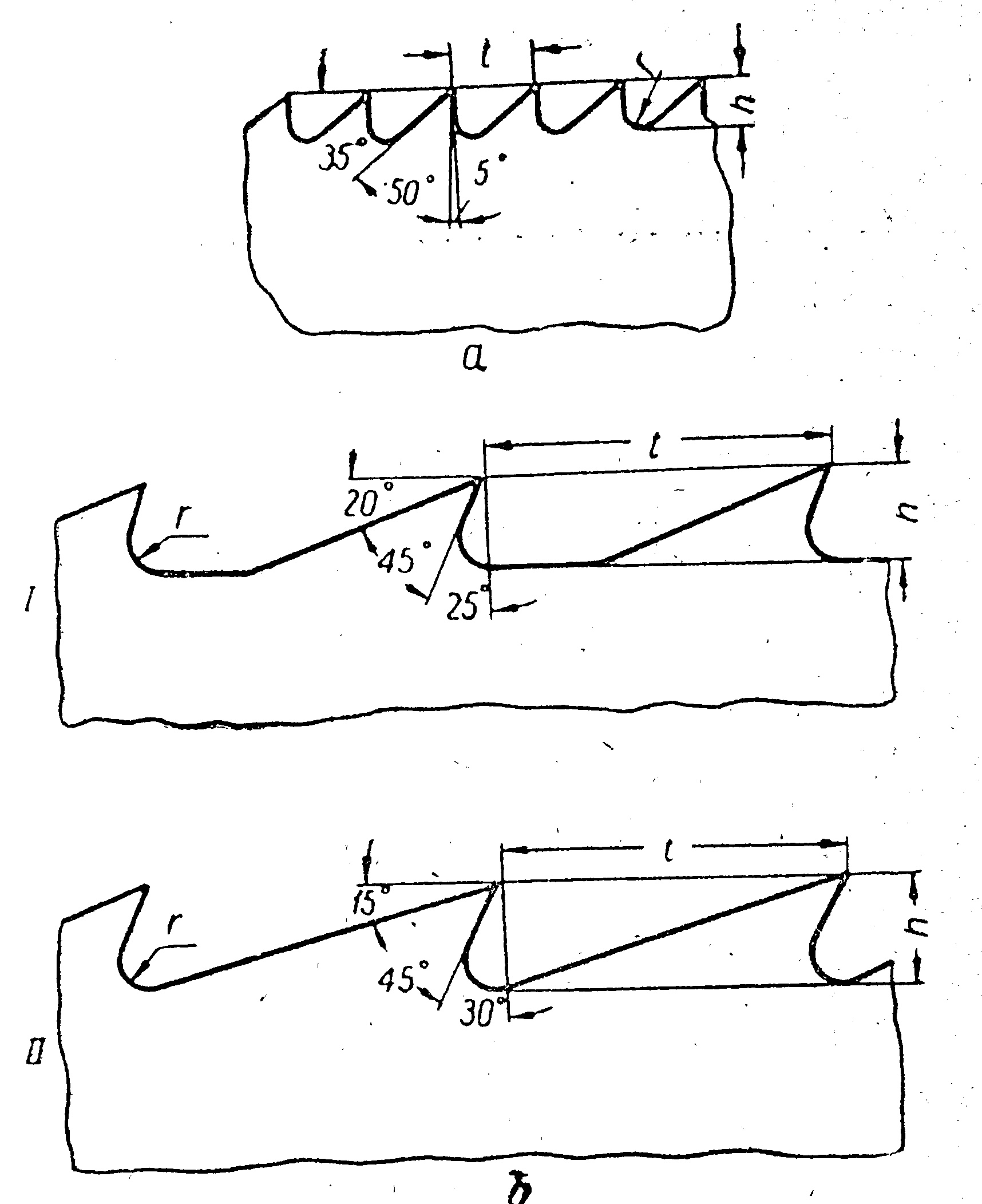
Figure 2 — Band-saw blade profiles.
Band saws are divided according to purpose into carpentry, whose blades serve as the cutting tool of carpentry band saws, and scrapers, whose blade serves as the cutting tool of heavy and medium type band saws. Reciprocating saws have profiles I and II.
The dimensions of the teeth of woodworking band saw blades can be determined from the ratio: tooth pitch t = (1,5 + 2,0) B', tooth height h = (0,5 + 0,6) t’, where `B’ is the width of the saw blade in millimeters.
Dimensions of carpentry and planing band saws
The values in the following table are transferred in order from the original content.
| Tester name | Length (in roll), mm | Width with teeth, mm | Tooth pitch, mm | Thickness |
|---|---|---|---|---|
| Carpentry | Multiple length of 4 m Multiple length of 6 m |
10 15 20 30 40 50 |
6 6 8 10 10 12 12 |
0,6 0,6 0,7 0,8 0,8 0,9 0,9 |
| Disruptive | Multiple length of 6 m Multiple length of 7 m Multiple length of 8,5 m |
50 85 125,150,185 |
30 40 50,50,50 |
0,9 1,0 1,0 1,2; 1,0 1,2; 1,01,2 |
Tooth profiles
| Profiles of teeth | Teeth pitch t, mm | Height of teeth h, mm | Radius of inner corner rounding r, mm |
|---|---|---|---|
| Carpentry | 6 8 10 12 |
2,0 – 3,0 4,2 – 4,4 4,8 – 5,0 6,3 – 6,5 |
1,5 1,5 2,5 2,5 |
| Resaw I | 30 40 50 |
9 11 13 |
3 4 4 |
| Rastruzhne II | 30 40 50 |
7,5 – 8 10 – 11 14 -15 |
3 4 4 |
Leaf width and radius of curvature
There is a dependence between the width of the bandsaw blade and the radius of curvature of the element being cut. It results from the fact that normal operation of the saw is possible with the condition that the width of the band saw blade is freely placed in the cut. When this condition is not met, the products will inevitably be defective.
Wide saw blades can cut curvilinear features if the spread size is greater than twice the thickness of the blade. Therefore, the saw blade is spread so that one tooth is skipped at a time.
| Curve radius, mm | 25 | 50 | 100 | 200 | 300 | 400 | 500 | 600 |
|---|---|---|---|---|---|---|---|---|
| Saw blade width | 6 | 10 | 15 | 24 | 29 | 34 | 37 | 42 |
When cutting pine and spruce wood with a moisture content of 12–30%, with a cutting speed of 40 m/min, the amount of movement per tooth 0,2–0,3 mm and a cutting height of 50–200 mm, carpentry or reaming saws must work without sharpening for four hours.
Permissible sheet tensioning forces
If during operation the tensioning forces of the saw blade are not exceeded, depending on its width and the conditions of normal exploitation of the machine, frequent tearing of the band saw blade can be avoided.
| Saw thickness, mm | Tension forces | |||||||
|---|---|---|---|---|---|---|---|---|
| 25 | 50 | 75 | 100 | 125 | 150 | 175 | 200 | |
| 0,8 | 250 | – | – | – | – | – | – | |
| 0,9 | 300 | 400 | 500 | 600 | 750 | – | – | – |
| 1,0 | 350 | 500 | 600 | 750 | 1000 | 1100 | – | – |
| 1,2 | – | – | 750 | 900 | 1100 | 1300 | 1500 | – |
| 1,4 | – | – | – | 1100 | 1300 | 1500 | 1800 | 2200 |
| 1,6 | – | – | – | – | – | – | 2100 | 2300 |
Showing off and clenching the teeth
Band saw blades can be spread on special automatic machines, using hand spreaders or hammer blows directly on the tooth. In addition to spreading, compression of the teeth is also applied on special machines or using special accessories.
The size of the spread ranges from 0,25 to 0,30 mm for carpenter’s saws and from 0,40 to 0,50 mm for scrapers when cutting conifers with a moisture content of up to 25%. When cutting hardwood species with moisture content below 25%, one-sided spread is 0,20–0,25 mm for joiners and 0,40–0,45 mm for reciprocating saws. For both conifers and broad-leaved species, spreading increases with increasing moisture content of the material being cut.
Related topics: woodworking machines and tools, circular saw machines, softwood and hardwood lumber, lumber and timber window and door manufacturing.