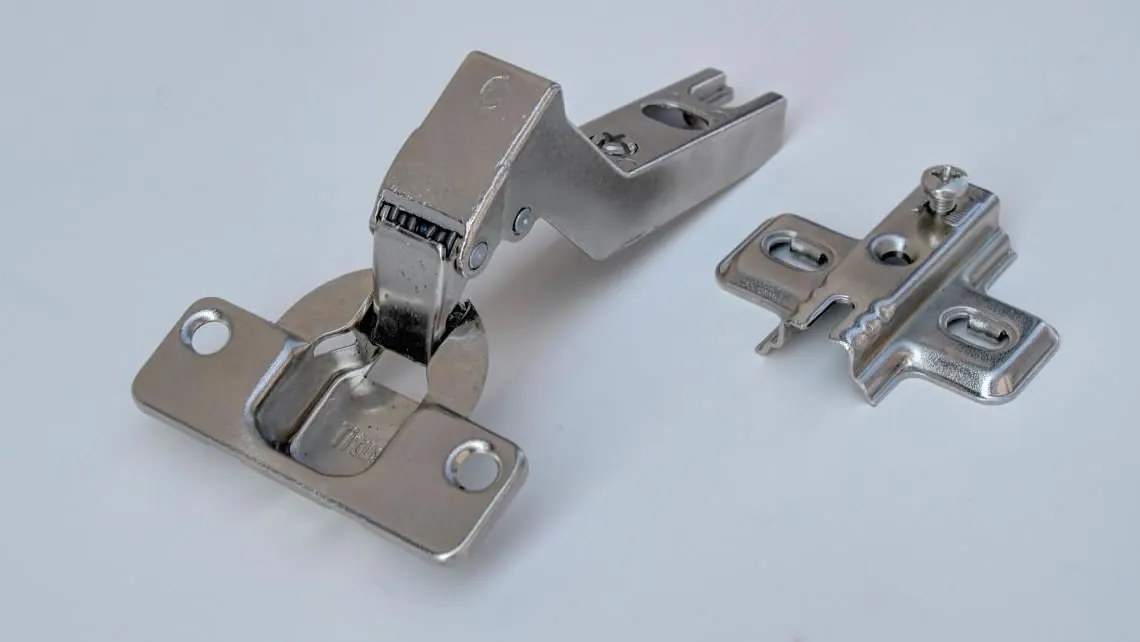
Wooden parts that are not rigidly joined but must rotate in relation to each other are connected with metal hinges. There is a wide selection of hinges, and the type used for doors, windows, furniture or ladders matters.
The following sections present fastening methods, opening possibilities and several hinge forms from the original archival text.
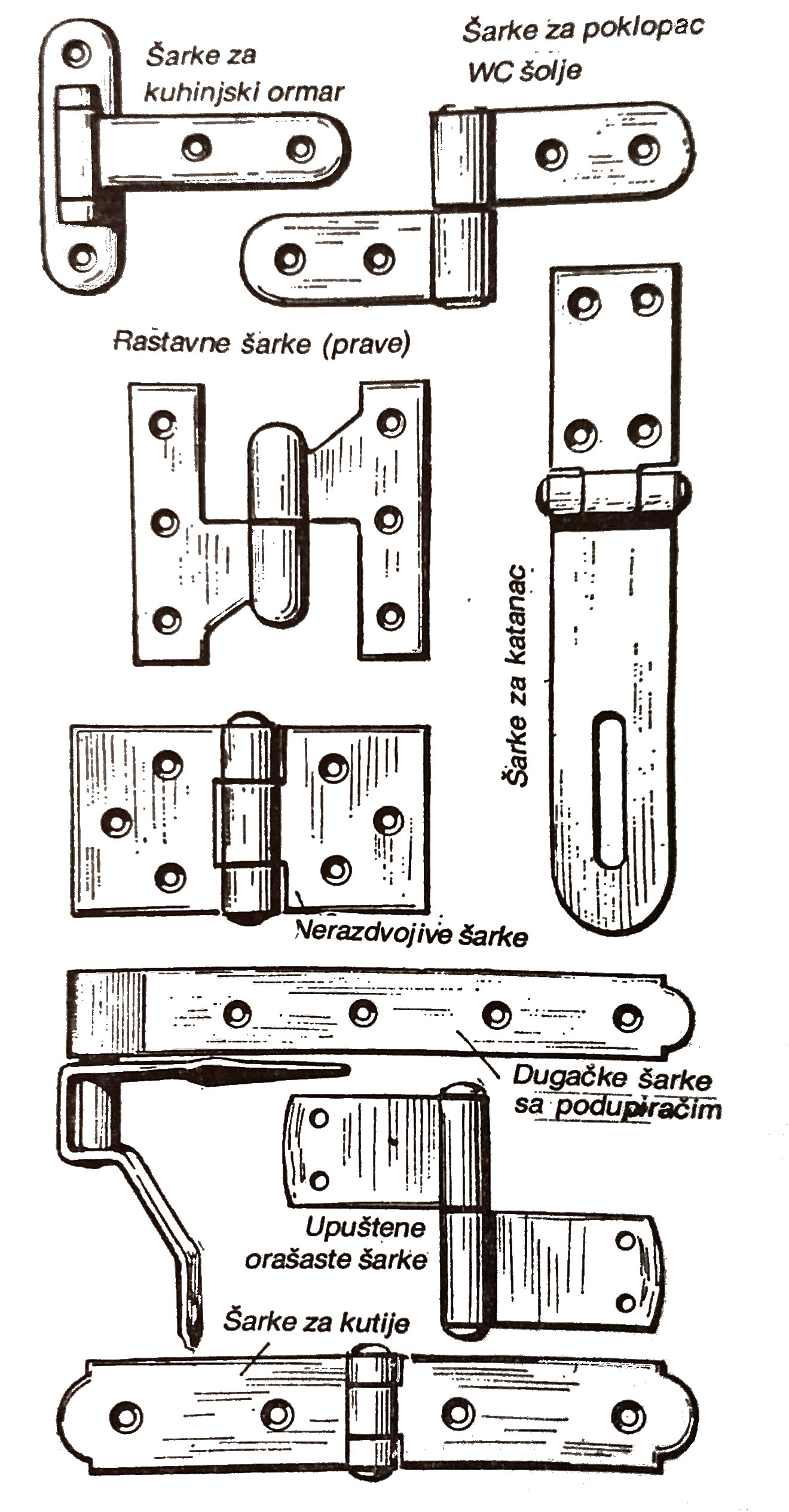
Figure 1: Modified forms of hinges for different purposes.
Hinges for doors, windows and other elements
Kitchen-cabinet hinges
They are made of steel or cast aluminium. They are used mainly for older types of kitchen cabinets and have square or rounded leaves. They are fastened with countersunk-head wood screws.
Refrigerator hinges
They are pressed or cast from brass, and their exterior finish is polished or nickel-plated. The hinge dimensions are 72 × 80 mm. They are used on older ice-cooled refrigerators whose doors are fairly heavy.
Toilet-seat hinges
Single hinges are made by pressing steel protected against corrosion with a copper layer, from cast aluminium or from plastic.
The material and manufacturing method of double hinges are the same as for single hinges, except that they have double leaves on one side. Stainless screws are recommended for fastening in both cases so that dripping water does not cause rust.
Long strap hinges with edge supports
Both parts are made of steel. The leaf length is 30–100 cm. They are used to fasten garage doors, barn doors, gates and similar elements.
Straight and bent lift-off hinges
Straight lift-off hinges are made of a bright polished material and measure 40 or 50 mm. Left- and right-hand versions are available, and they are used for doors on polished furniture.
Bent lift-off hinges are made of the same material, but their leaves are bent. They are used for doors on polished and lacquered furniture and furniture coated with polyester resins. The doors can be removed without taking out the screws.
Padlock hinges and safety hasps
They are also called safety hasps or padlock bolts, with a section through which the padlock shackle is inserted. They are made with painted, galvanised or burnished surfaces. The leaf length is 100–160 mm. They serve as closures for chests, cellar doors, grain stores and similar elements.
Hinges for double ladders
They are made of strong material because of the high forces that occur during use. They are supplied under numbers 1, 2 and 3 or in lengths of 200, 230 and 260 mm.
Non-separable hinges
They are pressed from bright cold-rolled material. The surface is protected by nickel plating, copper plating or polishing. Hinge length is 25 or 30 mm. They are used for furniture doors that do not open more than 90° and are not removed.
Butt and piano hinges
Butt hinges for furniture are made of steel with a nickel-plated, polished or burnished surface. They are fastened with countersunk-head wood screws. Their dimensions are 40 × 40, 45 × 45 and 80 × 80 mm.
Butt hinges are made in different forms from rolled sheet steel. In addition to wide, long, narrow, single-fold and double-fold variants, this group also includes piano hinges up to 2 m long.
Knuckle hinges
Knuckle hinges for furniture are made of bright metal with a polished finish and have a pin. Left- and right-hand versions are available. Their height, excluding the projection, is 40, 50 or 60 mm. They are intended primarily for heavier furniture doors.
Recessed knuckle hinges for windows
The leaves of these hinges are made of sheet steel and the pin is made of steel. They consist of two parts: a lower part with a pin and an upper part with a socket.
A hinge is left-handed if its leaf points to the left when the pin faces upwards; otherwise it is right-handed. The leaf carrying the pin is recessed into the frame and the leaf with the socket into the window sash. Leaf height is 6, 7, 8 or 10 cm.
Recessed knuckle hinges for doors
The basic information is the same as for window hinges. They are used to fasten doors, and their basic sizes are 8, 9, 10 and 12 cm.
Box hinges
They are made of flat steel with semicircular leaf ends. Their lengths are 160, 200, 250 and 300 mm. They are used for doors on boxes, chests and similar elements.
Double-pin hinges
They are used for surfaces that open through 180°, such as a table or a sewing-machine cover. They are made in cast and pressed versions and usually have three fastening holes. When the sewing-machine cover is opened, the hinges hold the opened side at 180° from its original position.
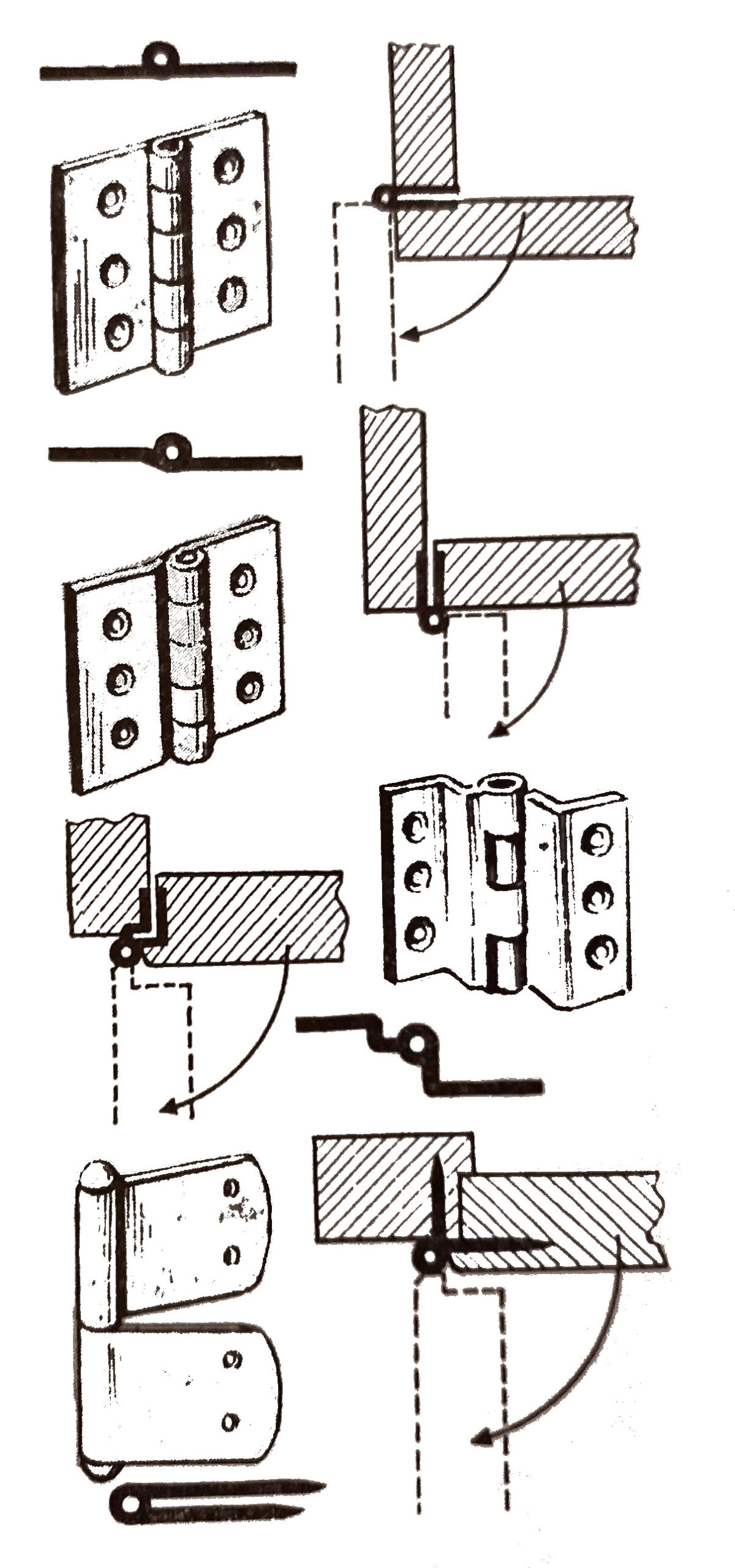
Figure 2: Methods of fastening and opening different hinges.
Practical joinery techniques
Removing and fitting a door
A simple lever can help when removing and fitting window sashes and doors. A pointed batten is placed under the centre of the leaf, with another batten 2–3 cm high beneath it. Pressing the pointed batten with the foot raises the door while both hands remain free to hold it or fit the leaf onto the hinges.
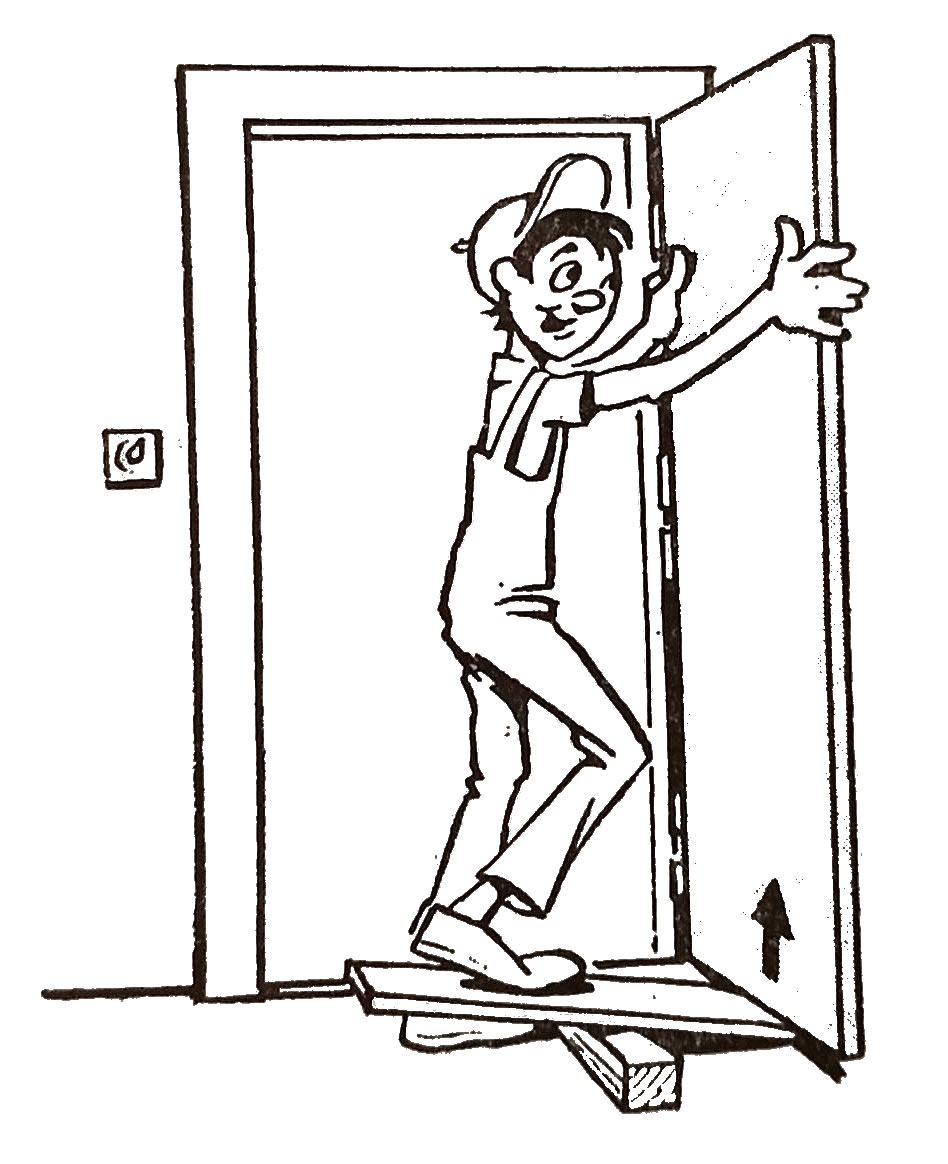
Figure 3: Removing and fitting a door with a wooden lever.
Equalising leg lengths
If a self-made table or chair does not have legs of equal length, the error can be corrected by using a small wooden block as a measuring aid.
The table or chair is positioned so that it rests on three legs while the shorter leg remains in the air. After checking that the surface is level and that the floor is completely flat, a small wooden block is placed next to the shorter leg and the height of the leg above the floor is marked on it. This measurement is transferred to the other three legs, which are then cut according to the mark.
The same procedure can be carried out with a wooden wedge whose angle is between 4° and 8°. The wedge is pushed under the shorter leg until the table is stable. The height between the floor and the leg is marked on the wedge, transferred to the other legs and they are cut according to the mark.
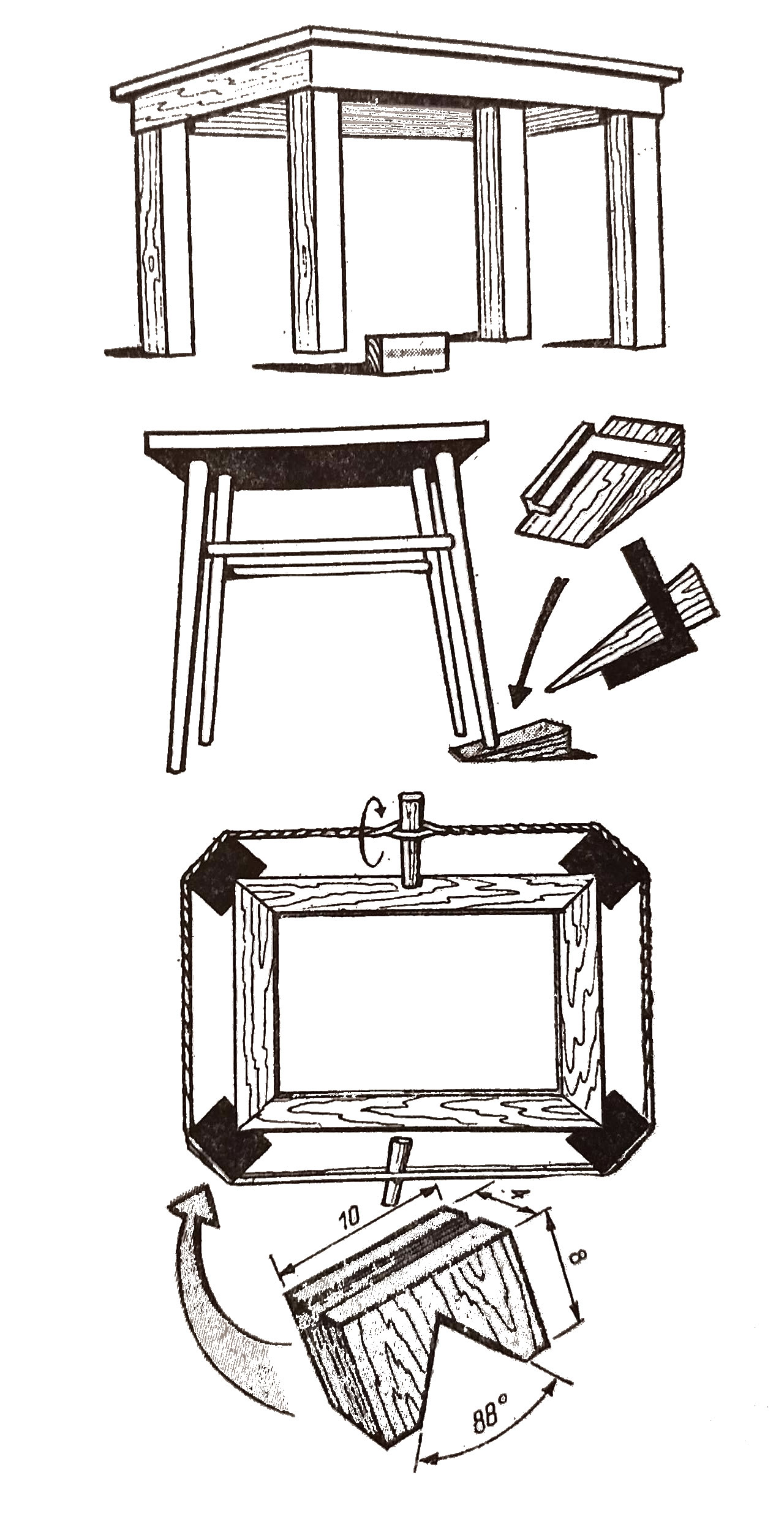
Figure 4: Equalising leg lengths and clamping a frame.
Clamping a frame during gluing
Wooden clamps can be used when gluing a frame. These are pieces of wood approximately 4 × 10 × 8 cm whose longer edges are cut at an angle of 88° to a depth of 8 cm, while the opposite side is grooved. The angle is not a right angle so that the edges of the cut bear against and clamp the frame edges.
One clamp is placed on each of the four frame edges and all of them are then connected with a strong cord. A piece of batten is inserted between the strands of the cord on two sides, and twisting the cord clamps the frame in the same way as on a frame saw.